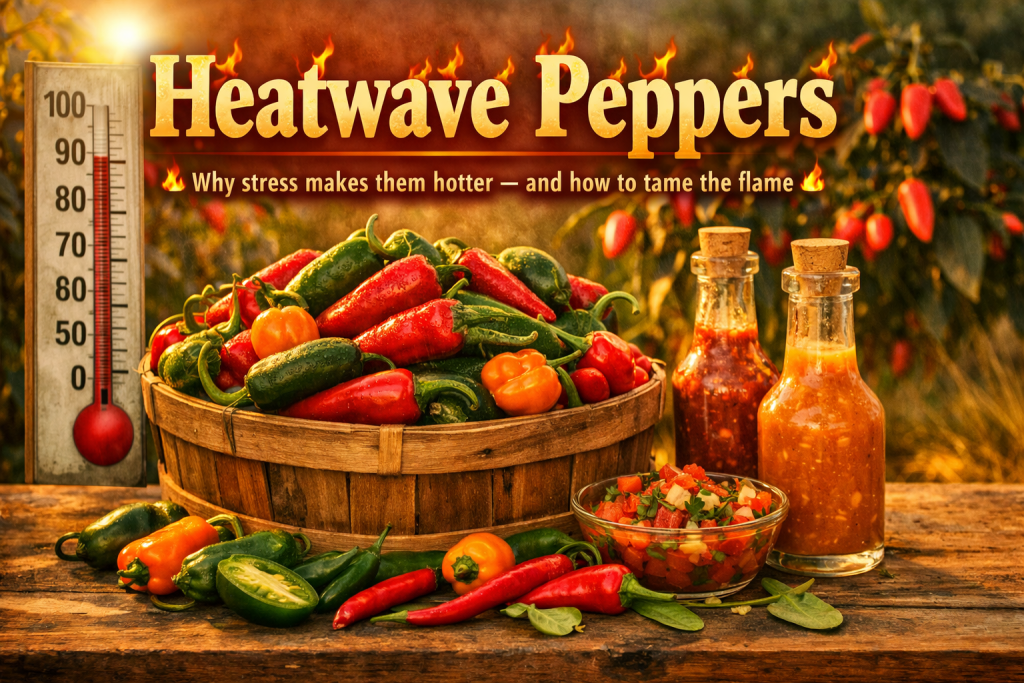
It’s been a blistering summer across North Texas, and while most plants are begging for relief, peppers are doing something unexpected — they’re getting hotter. Gardeners all over the region are discovering that their jalapeños, serranos, and cayennes are packing more punch than usual. We learned this firsthand at Two Doves Bees & Gardens, and it came with a story we still laugh about.
A few summers ago, we invited a Hispanic friend over and made stuffed jalapeños from our garden. He took one bite, froze, and looked at us like we’d committed a crime. He said he thought we were trying to kill him. These were jalapeños he’d eaten his whole life — but ours were so spicy they caught him completely off guard. At the time, we didn’t understand why. Now we do.
Why Heat Makes Peppers Hotter
Peppers produce capsaicin — the compound responsible for heat — as part of their natural defense system. When the plant is stressed, especially by extreme heat or inconsistent watering, it ramps up capsaicin production. In nature, this helps protect the seeds from being eaten too early. In the garden, it means your jalapeños in July taste nothing like your jalapeños in May.
During a heatwave, peppers often experience higher sun exposure, rapid temperature swings, and occasional drought stress. The fruit walls thicken, the oils intensify, and the flavor sharpens. All of this leads to hotter, more aromatic peppers.
How We Learned to “Tame the Flame”
After the jalapeño‑incident‑of‑the‑century, we started digging into pepper science. What we discovered changed how we grow them.
If you want hotter peppers, you allow mild, controlled stress — slightly less water and more sun. But if you want milder peppers, you do the opposite: consistent watering, steady moisture, and a little afternoon shade. Once we started watering our jalapeños more regularly, the heat level dropped noticeably. Our friend was relieved.
We even made a short video explaining this phenomenon and showing how stress affects pepper heat. You can watch it here: Tame the Flame
Turning Heatwave Peppers Into Hot Sauce
The beauty of hotter peppers is that they make incredible hot sauce. When the heat spikes, the flavor deepens — especially in jalapeños, serranos, and habaneros. A simple homemade hot sauce can be as easy as blending peppers with vinegar, garlic, and salt, then simmering briefly. Or you can ferment them for a richer, more complex flavor.
This is also the perfect time of year to make fresh salsa. A single heat‑stressed jalapeño can transform a bowl of tomatoes, onions, lime, and cilantro into something bright, bold, and unforgettable.
🌞 A Final Thought
While the heat has been tough on many plants, peppers are one of the few crops that actually improve under stress. Whether you like them fiery or mild, you can shape their flavor with simple gardening choices. And if you accidentally grow peppers that could knock someone off their chair — well, you’re in good company. We’ve been there too.
If you’d like to dive deeper into what we’re growing, cooking, and learning here at Two Doves Bees & Gardens, we’d love for you to visit us at TwoDoves.com. You can also join our Two Doves Insiders newsletter, where we share behind‑the‑scenes stories, garden tips, new videos, and updates from our North Texas homestead.