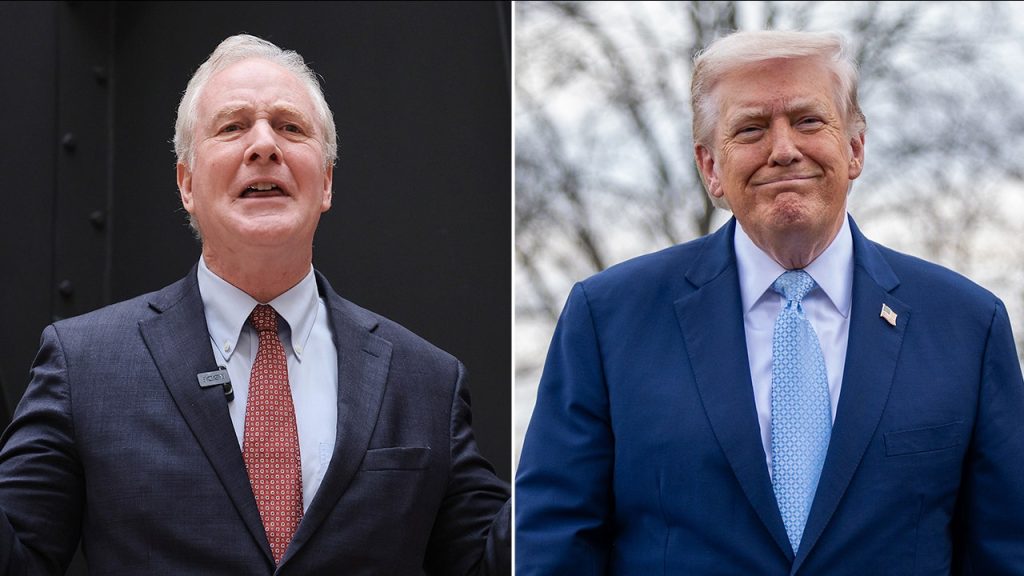
Sen. Chris Van Hollen, D-Md., accused Israeli Prime Minister Benjamin Netanyahu of pulling President Donald Trump into a war with Iran during an NBC “Meet the Press” interview as Trump returned from talks in China that produced no public pledge to broker an end to the fighting. Van Hollen argued the president was “dragged into this war” and pointed to Netanyahu’s public comments about removing Iran’s nuclear material, while the White House says the campaign aimed to eliminate an “imminent nuclear threat.”
Van Hollen leveled sharp criticism, saying “The president got dragged into this war. Prime Minister Netanyahu said that he’d been waiting 40 years for somebody to go to war with him in Iran. He found a president stupid enough to do it,” he said. “I blame Donald Trump for that decision, but here we are.” His lines are designed to pin the costs and chaos of conflict on the White House.
From a Republican perspective, that accusation flips reality. President Trump campaigned on strong national defense and confronting threats before they reach our shores, and many conservatives see military action against Iran as reluctant, targeted pressure to prevent a nuclear-armed regime from gaining the means to hit the United States and allies. The administration insists the moves were about stopping an imminent threat, not reckless adventurism.
Van Hollen also dismissed any role for China, saying “I don’t think we need China’s support,” and arguing “I think the fastest way to end the war in Iran is just to stop digging a hole even deeper, and that’s what we should do right now.” Democrats who call for a quick retreat are asking the U.S. to back away from a credible deterrent while Tehran still threatens the region and American interests.
There’s a clean, conservative case to make: leadership requires decisions that are unpopular but necessary when nuclear proliferation is on the table. Critics point to the Obama-era diplomacy, but the JCPOA is not the unqualified success some portray. Van Hollen praised that agreement, noting, “The JCPOA prevented Iran from getting a nuclear weapon. It dramatically contained its nuclear enrichment program, and it had the world’s most intense inspection regime.”
Still, many Republicans argue the JCPOA left gaps and sunset clauses that let Iran resume its program once restrictions eased. That is precisely why the Trump administration took a harder line, claiming it had severely degraded Iran’s enrichment capacity. Van Hollen repeated the administration’s own earlier boasting back in his critique: “Just last year, Donald Trump told the country that he had obliterated Iran’s nuclear enrichment program, taken care of it, and his head of DNI, Tulsi Gabbard, testified that they have no evidence that Iran wants to resume it,” Van Hollen said.
Netanyahu’s posture figures into the political fight. The Israeli leader told CBS’s “60 Minutes” that the nuclear material must be removed as the only route to ending the conflict, flatly saying, “You go in, and you take it out.” That blunt prescription underscores why American policymakers and allies grew convinced pressure alone wouldn’t be enough.
The White House has defended the campaign as a necessary military effort to eliminate an “imminent nuclear threat,” and it pushed the same line in public statements that Iran’s nuclear facilities had been “obliterated.” For conservatives, those words reflect action rather than weakness and a willingness to enforce red lines that prior administrations declined to defend effectively.
Still, Democrats including Van Hollen frame this as proof of broken promises on wars and household costs, insisting Trump ran to keep the U.S. out of new conflicts and to lower prices. Van Hollen argued the war undermines those pledges and blamed the president for rising costs, a political critique aimed at domestic fallout rather than strategic outcomes abroad.
Political noise will intensify as Congress and the courts wrestle with oversight and authority questions. Republicans will press the argument that confronting nuclear threats is part of preserving peace, not starting endless wars, while Democrats will paint any military pressure as a dangerous drift toward escalation. The debate will hinge on whether action is judged necessary defense or avoidable provocation.