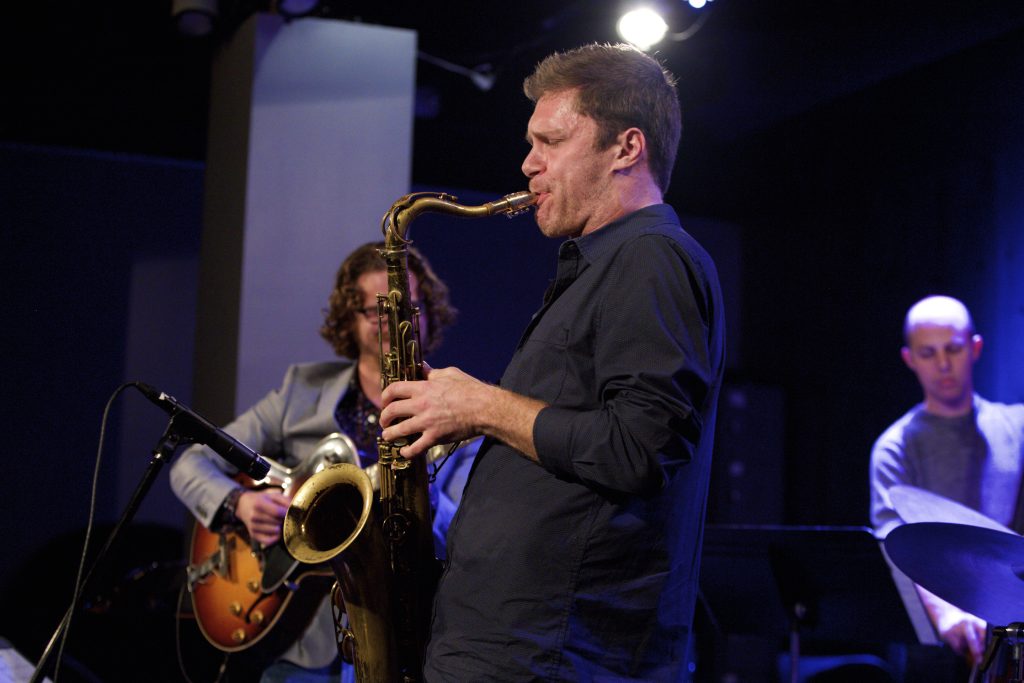
There are places in a city that hold their character so completely, so unapologetically, that walking through the door feels like a small act of discovery. The Blue Whale, tucked on the eighth floor of the Weller Court shopping complex in the heart of Little Tokyo, is exactly that kind of place. It is a jazz club in the truest sense — not a restaurant that happens to have a piano in the corner, but a room built around the music, where the stage is the reason for everything else.
Getting there is part of the experience. You take an elevator up from a quiet courtyard, step out into a dim, intimate room strung with warm light, and suddenly the city below feels very far away. The space seats around a hundred people on a good night, which means every seat is a good seat. Whether you are at the bar nursing a glass of Japanese whisky or settled at a small table close enough to the stage to see the drummer’s hands, you feel connected to the performance in a way that larger venues simply cannot manufacture.
The Blue Whale has been a cornerstone of the Los Angeles jazz scene since it opened in 2009, and the booking calendar reflects genuine curatorial taste. The club champions forward-thinking jazz — the kind that honors tradition while refusing to be constrained by it. You will find local legends sharing bills with musicians flying in from New York, Tokyo, and beyond. Many of the performers have deep roots in the L.A. scene, and there is a communal, almost familial atmosphere among the regulars that a first-time visitor can feel immediately. People here actually listen.
Shows typically run Thursday through Sunday, with sets beginning around nine in the evening. The cover charge is modest — generally between ten and twenty dollars depending on who is playing — which makes the Blue Whale one of the more accessible cultural experiences in a city where entertainment costs can escalate quickly. There is a full bar, and the drink program leans thoughtfully toward Japanese spirits and craft selections that feel intentional rather than generic.
Little Tokyo itself is worth arriving early to explore. The neighborhood is walkable and full of excellent Japanese restaurants, bakeries, and the Japanese American National Museum just blocks away. Grab dinner nearby, stroll the courtyard, and then make your way upstairs when the music starts. The combination of neighborhood and venue creates an evening that feels complete in a way that is genuinely rare.
Los Angeles has no shortage of live music options, but the Blue Whale offers something that the larger, louder venues cannot: the feeling that you are inside the music rather than simply watching it from a distance. If you have ever wanted to understand why jazz still matters, spend a night here. The answer arrives within the first few bars.