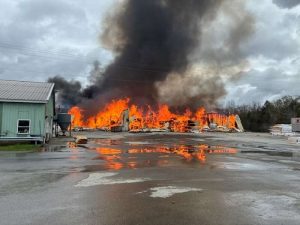
Cal Fire crews responded Saturday afternoon to a vegetation fire near Warner Springs, tackling three separate spot fires each estimated at about one‑tenth of an acre. Officials said conditions made the fire capable of expanding to roughly 10 acres, but no buildings were threatened and there were no injuries or evacuations reported. The response centered on containing those scattered ignitions before they could merge or grow further.
The three spot fires were small in size but worrying because they were separate ignitions close enough to one another to pose a consolidated risk. At roughly one‑tenth of an acre apiece, each fire was manageable on its own, yet the possibility of growth to 10 acres under the right conditions pushed crews to act quickly. That potential for rapid expansion is what turns an otherwise minor blaze into a situation that demands immediate attention.
Cal Fire moved in on the Saturday afternoon report with typical urgency, positioning resources to prevent the discrete fires from joining. Containment strategy for multiple spot fires focuses on preventing convergence and stopping ember-driven spread, which is especially important when several small fires are burning in proximity. The quick initial assessment and deployment helped keep the situation from escalating.
Weather and fuel conditions matter in scenarios like this, because a strong wind shift or dry brush can turn a controlled spot fire into a far larger incident. Officials estimated the maximum potential growth at about 10 acres, a projection that reflects how fires behave when unchecked rather than a recorded spread. That sort of estimate guides the size and type of response, and it explains why crews were on scene even though structures were not directly threatened.
Importantly for residents and property owners in the area, Cal Fire confirmed there were no injuries and no evacuations were ordered, indicating the immediate danger had been managed. The lack of evacuated homes also suggests that defensive actions and situational awareness on the ground were effective at keeping people safe. Still, an incident with multiple spot fires serves as a reminder of how quickly small ignitions can change the local risk picture.
For local officials and firefighters, the priority was straightforward: locate each ignition, establish containment lines where practical, and monitor for any new spot fires downwind. When multiple small fires are present, resources are often spread to address each one individually while maintaining a unified incident strategy. That approach helps prevent gaps that could allow the blazes to expand unexpectedly.
The Saturday afternoon call near Warner Springs underscores how vegetation fires often start small but can demand outsized attention when conditions favor spread. Even fires measured in tenths of an acre can pose complications when they are separate and close enough to merge. Cal Fire’s early response reduced the odds of that happening and kept structures out of harm’s way.
By the time officials wrapped up the immediate response, the situation had not produced injuries or displacement, and no structures were put at risk according to the report. The incident is a reminder that swift action on small fires matters, and that local awareness combined with rapid firefighting response can limit an ignition’s consequences. Warner Springs residents were left with the reassurance that the threat had been addressed and contained.