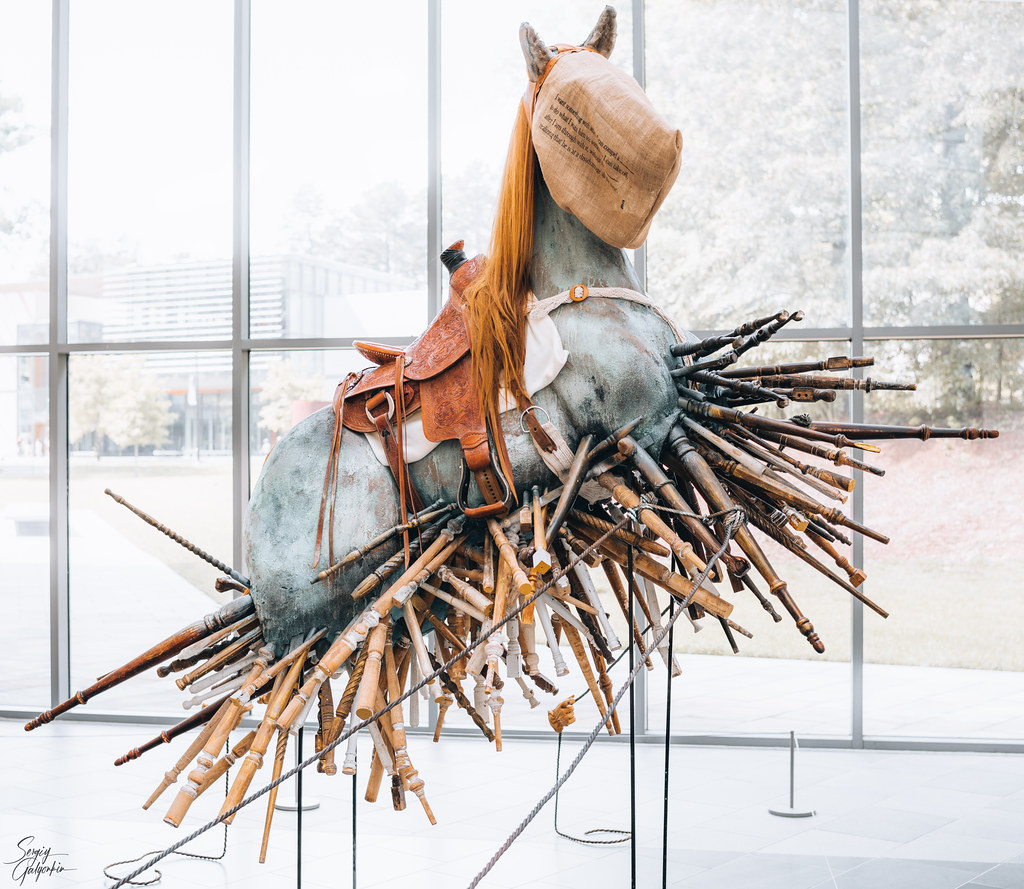
There is a moment that happens to nearly every first-time visitor to the Nasher Museum of Art at Duke University. You walk through the entrance on Campus Drive, pass beneath that sweeping geometric canopy designed by architect Rafael Viñoly, and suddenly the outside world — the traffic, the to-do lists, the noise — simply falls away. What replaces it is light. Enormous skylights flood the galleries with a soft, diffused glow that makes every painting, sculpture, and installation feel like it was made to live exactly here. That moment is worth the drive to Durham all by itself.
The Nasher sits on the western edge of Duke’s main campus in a neighborhood that blends gothic stone architecture with leafy, shaded walkways. Getting there is part of the pleasure. Park along the campus perimeter, stroll past the Duke Chapel, and let the walk build a little anticipation. By the time you arrive at the museum’s clean, modernist facade, you are already in a different headspace — which is precisely the right one for experiencing serious art.
The permanent collection is genuinely impressive for a university museum. It spans more than five thousand works and reaches from ancient American and African art all the way through contemporary pieces that challenge and delight in equal measure. You might find yourself lingering in front of a striking pre-Columbian ceramic one minute and then turning a corner to confront a bold abstract canvas the next. The breadth never feels scattered, though. The curators have an evident talent for creating conversations between objects across time and culture, so the galleries feel cohesive rather than encyclopedic.
The rotating special exhibitions are where the Nasher really earns its reputation as one of the Southeast’s essential cultural destinations. The museum has hosted nationally significant shows that draw visitors from well beyond the Triangle, and the programming calendar consistently reflects a commitment to diverse voices and perspectives. Before you visit, it is worth checking the website to see what is currently on view — you may find yourself planning your whole weekend around the closing date of a particular show.
Admission is free for Duke students and quite reasonable for everyone else, which makes a spontaneous Tuesday afternoon visit entirely guilt-free. The on-site café is a pleasant spot to decompress after a couple of hours with the collection, and the museum shop stocks art books and locally made goods that make for genuinely thoughtful souvenirs.
What stays with you after a visit to the Nasher is not just a single image or object, though you will almost certainly have one of those lodged in your memory. It is the feeling that Durham takes art seriously — that this city has built something here that expects a great deal from its audience and trusts that audience to rise to the occasion. That kind of cultural confidence is rare, and it makes the Nasher one of the most rewarding places you can spend a few hours in the entire region.