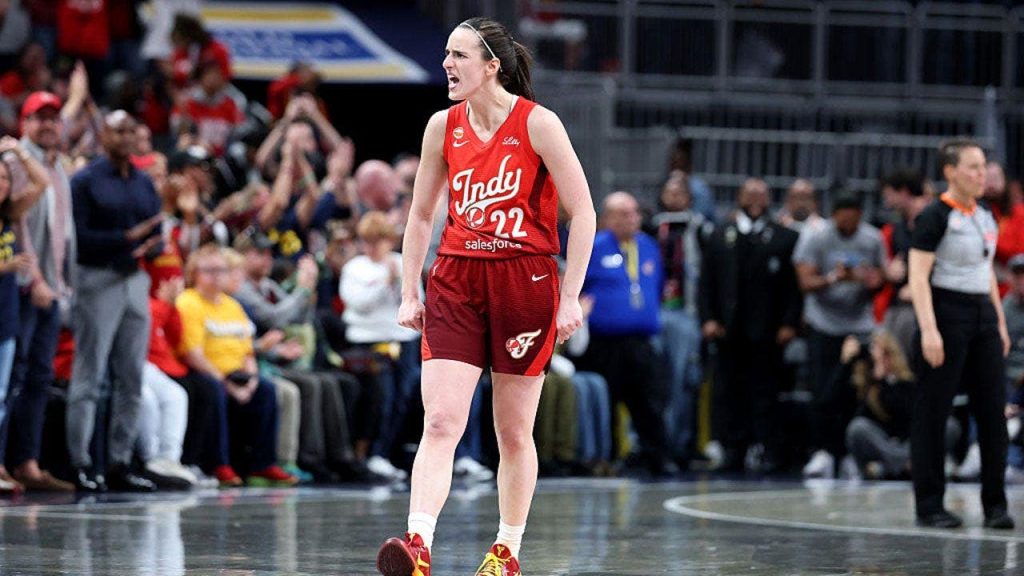
Friday night’s WNBA tilt between the Indiana Fever and the Washington Mystics turned into a curious stat story centered on Caitlin Clark and a pair of plays that scorers declined to mark as assists, while Aliyah Boston’s quiet night and the Fever’s uneven scoring also drew attention.
There was more than a box score quirk at work; the disagreement over two assists stripped a potential historic footnote from Clark and raised questions about how the league applies its own statistical judgment. The Fever managing just nine points in the second quarter only made the situation feel stranger, and Clark’s role at the center of the debate became the headline.
The two plays in question were borderline plays where the pass appeared to lead directly to a basket, but a slight deflection or hand-off muddied the call. Those gray-area plays are exactly where official scorers lean on judgment rather than a clear cut rulebook directive.
ZERO BS. JUST DAKICH. TAKE THE DON’T @ ME PODCAST ON THE ROAD. DOWNLOAD NOW! That blaring promo sat in the middle of the coverage, a reminder that the drama around a single game can dovetail with louder media moments and commercial grabs.
Assist rulings are typically made by official scorers following league statistical guidelines and precedent, not by a page in the public rulebook that spells out every nuance. When a pass nudges off a defender or becomes a shovel-style feed, scorers must judge if the recipient’s shot was the direct result of the pass or if the passer’s influence had already ended. Those judgments are subjective, and that subjectivity is why these two plays became a bigger story than a routine stat log.
If a pass reaches the intended teammate and that teammate scores without altering their angle or effort dramatically, most scorers will call it an assist; if the ball forces a player to adjust or to make an extra move, the assist tag often disappears. That gray line between “direct” and “required effort” is where leagues need clearer standards so historic milestones aren’t decided at the whim of a scorer’s interpretation. It’s a fixable problem, and in my opinion the league should tighten the guidance so fans and players aren’t left arguing over decimals and judgment calls.
Beyond the scoring sheet, the stakes were real: had the league credited those two assists to Caitlin Clark, she would have recorded only the sixth 30-point, 10-assist game in WNBA history, and the first player to do it twice. On top of that stat milestone, she would have become the fastest player to reach 1,000+ points, 250+ assists and 250+ rebounds, doing it in 54 games and eclipsing the mark currently held by Diana Tarausi’s 62 games.
There’s also a practical side to this for a lot of fans: betting. Wagers on double-doubles and assist totals are a major part of modern sports engagement, and bettors had money on Caitlin Clark clearing 9.5 assists or securing a double-double. When statisticians withhold assists in close calls, those bets can swing by hundreds or thousands of dollars, which is why a stat dispute feels like more than just trivia to many people.
This isn’t simply about one player’s ledger or a box score quirk; it touches on integrity and consistency in how the game is recorded. The league has the tools to review plays, clarify guidance, and update scorers so that landmark performances are captured accurately. WNBA officials should examine these two plays and decide whether the balance of judgment leans toward awarding Clark the assists she appears to deserve.