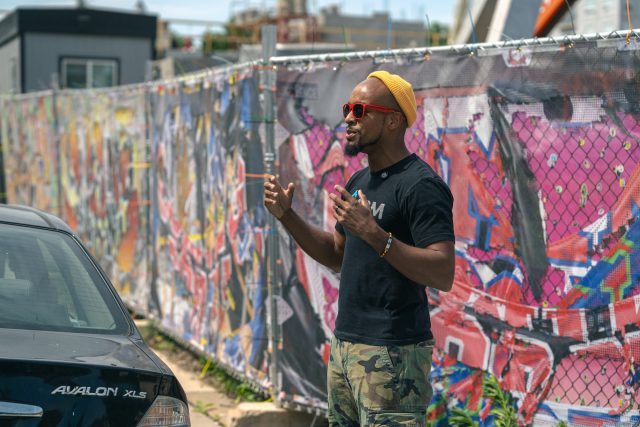
As a licensed architect, stepping onto a construction site begins with a familiar ritual. However, for neighbors, the fence surrounding the site often represents a barrier. What if artists were employed in the initial construction phase as essential creative workers, and the construction fence was part of the scope of work?
Transforming Construction Sites into Outdoor Galleries
Baltimore doesn’t have an artist talent problem; it has an opportunity infrastructure problem. The city celebrates its world-class creatives inside institutions, but outdoor galleries, such as those on construction sites, sit blank and sad. The idea of transforming construction sites into outdoor galleries was inspired by Berlin’s ‘A-Fence’ initiative, which turned a massive five-year construction site into a rotating outdoor gallery.
At Nosreme Baltimore, a framework was tested at 211 W. 28th Street, collaborating with artists and developers. The results proved what’s possible when art is treated as infrastructure. Developers are open to it, and artists are ready. The missing piece is a system that embeds creative work into the construction phase, not as an accessory, but as a standard part of building a city.
Baltimore’s creative community has been quietly exporting their brilliance to cities that offer platforms that haven’t been built yet. Many local artists leave because they can’t build sustainable careers in the city. The question is whether to keep leaving the walls blank or start treating them as one of the largest platforms to show visitors and residents the real Baltimore of today.
Original reporting: Baltimore Fishbowl — read the source article.