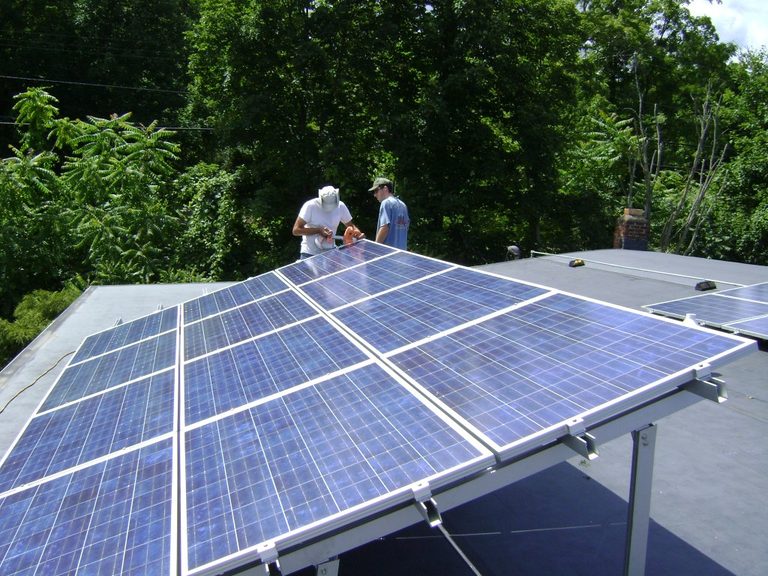
Early July’s heat wave in Connecticut wasn’t just uncomfortable, it was dangerous. Temperatures climbed into the triple digits, with heat indices soaring well above 100°F. As communities came together to open cooling centers and check on neighbors, there was another group of unsung heroes quietly helping keep communities safe: the thousands of Connecticut homeowners, businesses, schools, farms, municipalities, and nonprofits with rooftop solar.
Rooftop Solar Production
According to ISO New England data, during the hottest hours of the day, behind-the-meter solar—electricity generated and used locally from rooftop solar systems across all six New England states—was producing approximately 3,594 megawatts (MW). This is electricity that never had to travel across the electric grid during one of the highest-demand periods.
Behind-the-meter solar was generating more electricity than the output of both New England’s largest power plants, the Millstone Nuclear Power Station, which produces approximately 2,000 MW, and Seabrook Nuclear Station, at roughly 1,250 MW. During the most dangerous hours of the heat wave, when air conditioners were working overtime and lives depended on reliable electricity, thousands of homes and businesses with rooftop solar were quietly doing their part.
Reducing Stress on the Grid
Their local generation reduced stress on the electric grid—likely preventing reliability challenges—and protected some of the most vulnerable neighbors. Many of these households also participate in demand response programs or use smart thermostats that automatically reduce electricity use during periods of peak demand, adding yet another layer of resilience.
Together, these distributed energy resources keep communities safe when the grid is under its greatest stress. This is an important reminder that Connecticut’s energy future cannot be an either/or conversation.
Original reporting: The Connecticut Mirror — read the source article.