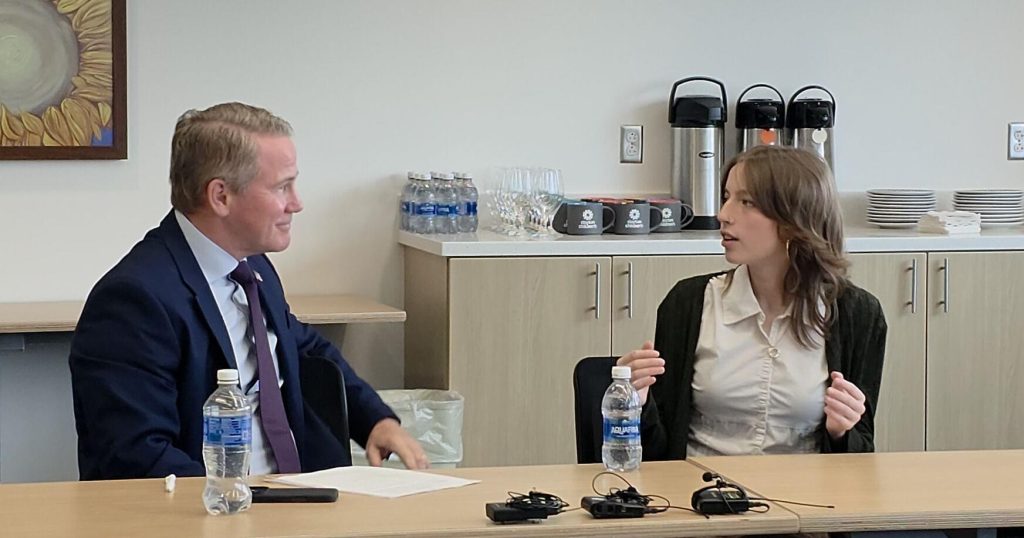
U.S. Sen. Jon Husted visited the Dayton region to tour Dayton Children’s new Mathile Center for Mental Health and Wellness and to meet with hospital leaders, staff and families to see how the center serves kids across Ohio. The visit highlighted the facility’s design, its clinical programs and the community partnerships that help bring mental health care closer to home in Dayton and nearby communities.
Stepping into the Mathile Center, Husted was shown how the space is set up to comfort children and make therapy less clinical and more humane. Staff described specialized services, outpatient care and crisis response work that aim to reduce wait times and keep families connected to treatment. The center’s layout and approach are meant to reduce stigma and create a place where kids feel safe enough to open up.
Hospital leaders explained the urgent need for pediatric mental health resources in the Dayton area and across Ohio, and Husted listened for concrete ways state and federal help can support those efforts. They discussed workforce challenges, including recruiting clinicians and retaining specialized staff. That shortage is a practical issue that affects whether families can get timely appointments and whether emergency rooms become the default option.
Families who use Dayton Children’s services shared their stories about finding care close to home and the difference it made for their children. Those personal accounts underscored how local access to therapy and psychiatric support can change outcomes and prevent crises. Hearing directly from parents helped frame the center’s work not as an abstract policy debate but as real care keeping kids in school and families functioning.
From a Republican perspective, Husted emphasized local solutions and efficient spending over one-size-fits-all mandates coming from Washington. He asked about public-private partnerships and how state programs can be better aligned with what hospitals are already building. That focus landed on practical steps like streamlining credentialing, expanding telehealth where it helps, and removing unnecessary red tape that slows care delivery.
The visit also touched on prevention and early intervention strategies that make a tangible difference, such as school-based programs and training for primary care providers to spot early signs. Investing in those upstream measures reduces pressure on emergency services and lowers long-term costs for taxpayers. Leaders at Dayton Children’s pointed to measurable gains when kids receive treatment sooner rather than later.
Husted and hospital officials discussed funding tools that could scale successful models across other parts of Ohio without disrupting local control. They explored combining state dollars, philanthropic support and hospital resources to expand services in a sustainable way. That mix allows communities to tailor care while leveraging statewide policies to remove barriers and expand the workforce.
On the ground in Dayton, the Mathile Center stands as an example of what targeted investment and community cooperation can accomplish for children’s mental health. Officials framed the center as one step in a broader effort to make sure every family in the region has real options when their child needs help. The visit left local leaders optimistic about building on momentum to close gaps in care across Ohio and keep treatment close to home.