There is a moment, standing on the deck of a century-old schooner with the bay stretching out before you and the foghorn groaning somewhere past the Golden Gate, when San Francisco stops being a postcard and becomes something altogether more alive. That moment happens at the San Francisco Maritime National Historical Park, and once you have experienced it, you will wonder why it took you so long to find your way here.
Tucked along the northern waterfront at the foot of Polk Street in the Fisherman’s Wharf neighborhood — though it belongs to a quieter, more dignified world than the tourist bustle just a few blocks east — the park is one of the most underappreciated gems in the entire National Park Service system. Admission to the visitor center and the beach is free, and even a walk along the Hyde Street Pier in the open air costs only a few dollars for the chance to board a fleet of historic vessels that feel nothing short of miraculous.
The star of the show is the Balclutha, a square-rigged sailing ship built in Scotland in 1886 that rounded Cape Horn seventeen times. Step below decks and you enter a world of creaking timber, brass fittings, and the faint smell of the sea soaked into every plank. The interpretive exhibits are thoughtful without being exhaustive, and there is something quietly extraordinary about standing in the captain’s quarters knowing that this very ship once carried grain across the Atlantic and salmon down from Alaska.
The Balclutha is not alone. The C.A. Thayer, an 1895 lumber schooner, sits alongside her, as does the Eureka, a side-wheel paddle ferry that once carried commuters across the bay and today houses a remarkable collection of vintage automobiles and street trolleys on its lower deck. Each vessel tells a chapter of California’s working maritime past, and together they form a living museum unlike anything else on the West Coast.
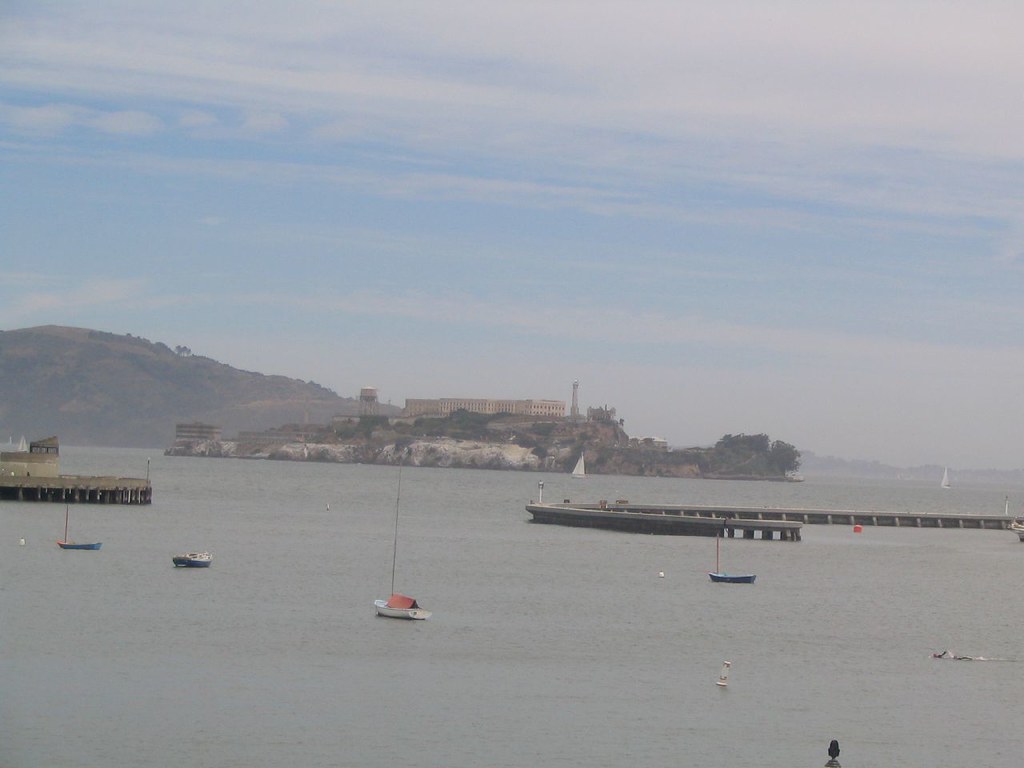
Back on land, the park’s visitor center — housed inside the Maritime Museum building, a stunning Art Deco structure that looks like a great ship run aground on the beach — offers exhibits, historic photographs, and the kind of warm, knowledgeable rangers who make you feel genuinely welcome rather than processed. The adjacent Aquatic Park Cove is a protected swimming beach where hardy souls take their morning dip regardless of the season, and the curving municipal pier that wraps around the cove is a favorite spot for anglers, walkers, and anyone who simply wants to stand at the edge of the bay and breathe.
Plan to arrive in the late morning when the light is golden and the crowds are still thin. Wear layers — this is San Francisco, and the wind off the water has opinions. Give yourself at least two hours, though three is better. Bring curiosity, and leave the itinerary a little loose. The park rewards wandering.
What makes this place so special is not any single artifact or view, but the cumulative sense of time that settles over you the longer you stay. San Francisco has always been a city defined by its relationship with the water — built on it, fed by it, shaped by the commerce and adventure it made possible. The Maritime National Historical Park is where that story is told most honestly and most beautifully. Come for the ships, stay for the feeling that you have touched something real.