There is a moment, somewhere between the push of the tide and the first subtle swell of a redfish tail breaking the surface, when Georgetown, South Carolina stops being a charming historic town on a map and becomes something far more elemental. That moment happened to me on the tidal flats just off the Winyah Bay estuary, standing knee-deep in warm, tea-colored water with a fly rod in my hand and what felt like the whole wild Lowcountry spread out around me.
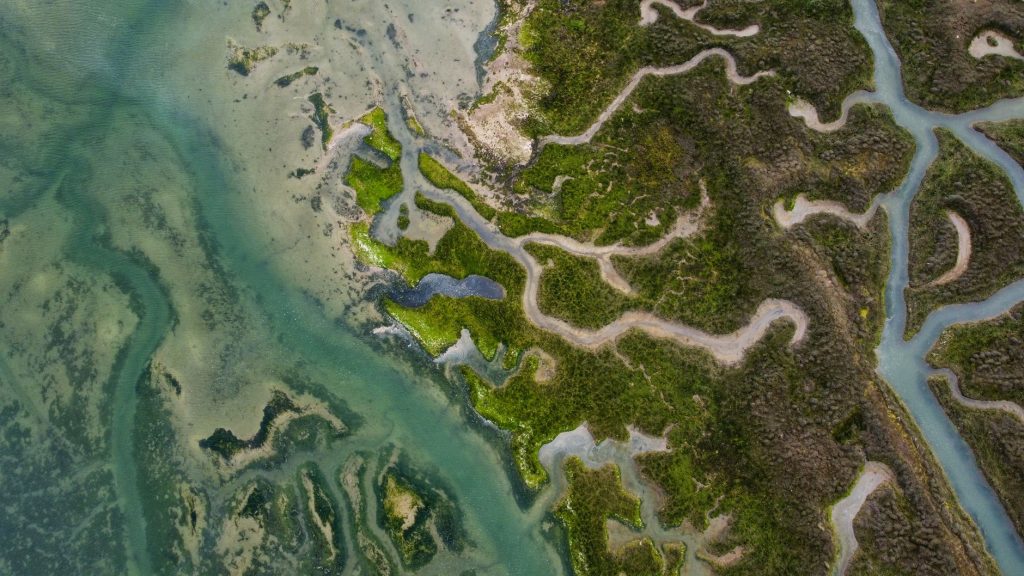
Georgetown sits at the confluence of five rivers — the Pee Dee, the Waccamaw, the Black, the Sampit, and the Great Pee Dee — which together drain into Winyah Bay before spilling into the Atlantic. The result is one of the most productive and ecologically rich estuarine systems on the East Coast. Fly fishing these flats and tidal creek systems is not just a recreational pursuit; it’s an immersion in a landscape that has barely changed since the days of the old rice plantations that once lined these same waterways.
The primary quarry here is the red drum — locally called redfish — and they are everywhere in the warmer months, tailing and rolling through the spartina grass edges as the tide pushes in. Spotted sea trout, flounder, and even the occasional tarpon round out the action from late spring through early fall. What makes this fishery particularly special is the visual element. Sight fishing on the flats, spotting a copper-sided redfish before making a precise cast, is about as close to saltwater fly fishing perfection as most anglers will ever experience outside of the Florida Keys.
Local guides operate out of Georgetown’s working waterfront, launching from the public boat ramp near the foot of Clement Ferry Road and the marinas tucked along the Sampit River. A good guide is worth every dollar here — the creek systems are labyrinthine, the tides are everything, and knowing which flat holds fish on a given morning is a skill built over years of watching the water. Most half-day trips run four to five hours and are ideally timed to ride an incoming tide across the grass flats before the water peaks and the fish scatter back into the deeper cuts.
Even if the fish are finicky — and sometimes they are, because that’s fishing — the scenery alone earns its keep. Great blue herons stalk the shallows alongside you. Bottlenose dolphins occasionally work the same edges you’re wading. Osprey circle overhead with casual authority. The marsh stretches out in every direction in that particular shade of green that only exists in the Carolina Lowcountry, and the silence is the good kind, broken only by the sound of moving water and wind in the grass.
Georgetown itself makes a fine base camp for the whole experience. After a morning on the water, you can be back on Front Street within twenty minutes, cleaned up and sitting down to a cold beer and a plate of local shrimp before noon. The town’s compact, walkable historic district means your afternoon is easy — a stroll past antebellum architecture, a browse through a gallery, a long sit on the harborwalk watching the shrimp boats come and go.
The best window for tidal flat fishing around Georgetown runs from April through October, with May, June, and September arguably the peak months for redfish in the grass. Come earlier in the day when you can — the light is better for spotting fish, the heat is manageable, and there’s something genuinely irreplaceable about watching a Lowcountry sunrise come up over a quiet tidal creek before the rest of the world is awake. Book a guide, bring polarized sunglasses, and leave your expectations loose. Georgetown’s flats have a way of exceeding them anyway.