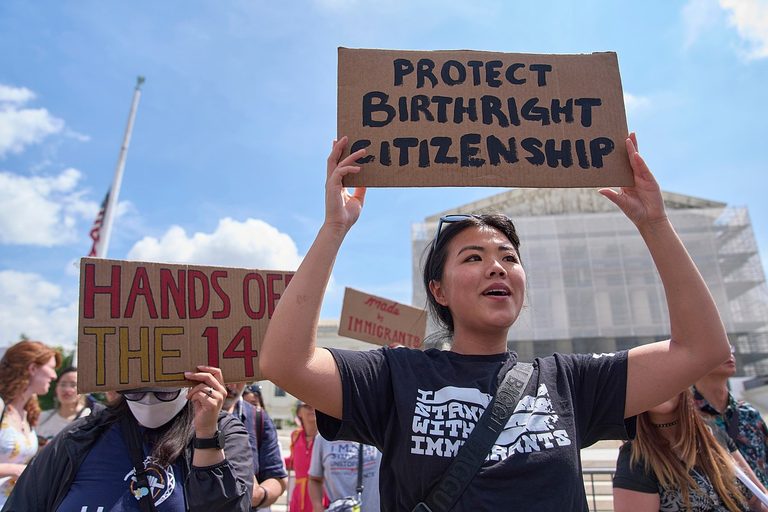
President Donald Trump has announced that he will be asking for a rehearing by the United States Supreme Court after a June 30 ruling rejected his executive order declaring that children born to parents who are in the United States illegally are not American citizens.
Background on Birthright Citizenship
Birthright citizenship became law in 1868 when the 14th Amendment was ratified, granting automatic citizenship to nearly everyone born on U.S. soil. The Trump administration has argued that the practice is a magnet for illegal immigration, with some officials pointing to so-called birth tourism networks that arrange for non-U.S. citizens to come to the country solely to give birth.
However, the U.S. has been cracking down on birth tourism since before Trump took office, and giving birth on U.S. soil by temporary visa holders is not illegal. The Supreme Court has ruled that anyone born in the U.S. is a citizen, including if their parents are in the U.S. illegally or temporarily.
International Comparison
While it is true that the U.S. has a unique approach to birthright citizenship, it is not the only country with unrestricted birthright citizenship. Dozens of countries, including Canada, Mexico, and many nations in Central and South America, also grant citizenship to children born on their soil.
Original reporting: Texarkana Gazette — read the source article.