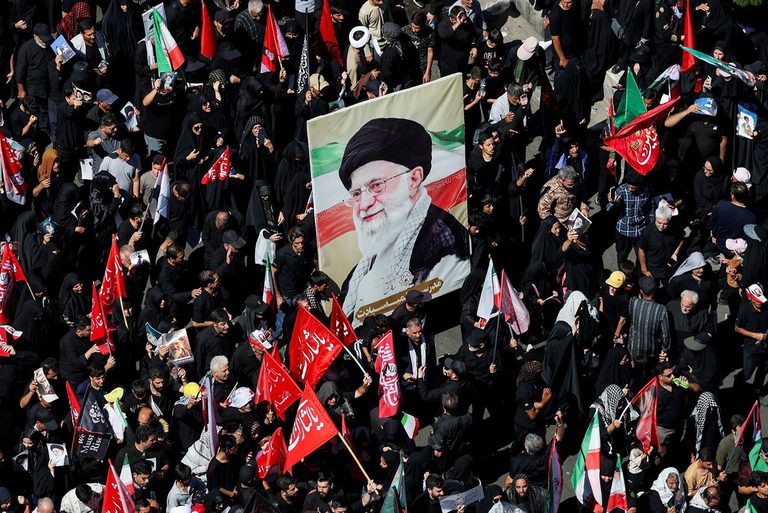
Iran’s funeral proceedings for Supreme Leader Ali Khamenei have been crowded with millions of mourners. However, not everyone is grieving. The funeral events, culminating in Khamenei’s burial in the northeastern city of Mashhad, have been a tale of two peoples: those who mourn and those who don’t.
Divided Sentiments
Many Iranians are angry at the spectacle, associating Khamenei with an oppressive regime that has silenced dissent over the years. Others feel apathy, with some even treating the funeral days as an opportunity to head out of congested cities.
The absence of former public figures, including some former presidents, also shows the tight grip imposed by organizers of the event. The current regime’s support base feels more galvanized than ever.
Regime’s Message
The regime has used Khamenei’s funeral to invigorate its base, according to experts. The funeral proceedings were intended to signal to the United States and Israel that military action has not – and will not – bring down the Islamic Republic or foment dissent against the regime.
However, the conspicuous absence of key figures, including Khamenei’s son and successor Mojtaba, has led to speculation about his whereabouts. The new leader has not made a public appearance since his appointment as supreme leader following his father’s death.
Original reporting: KEYT (Ventura/Santa Barbara) — read the source article.