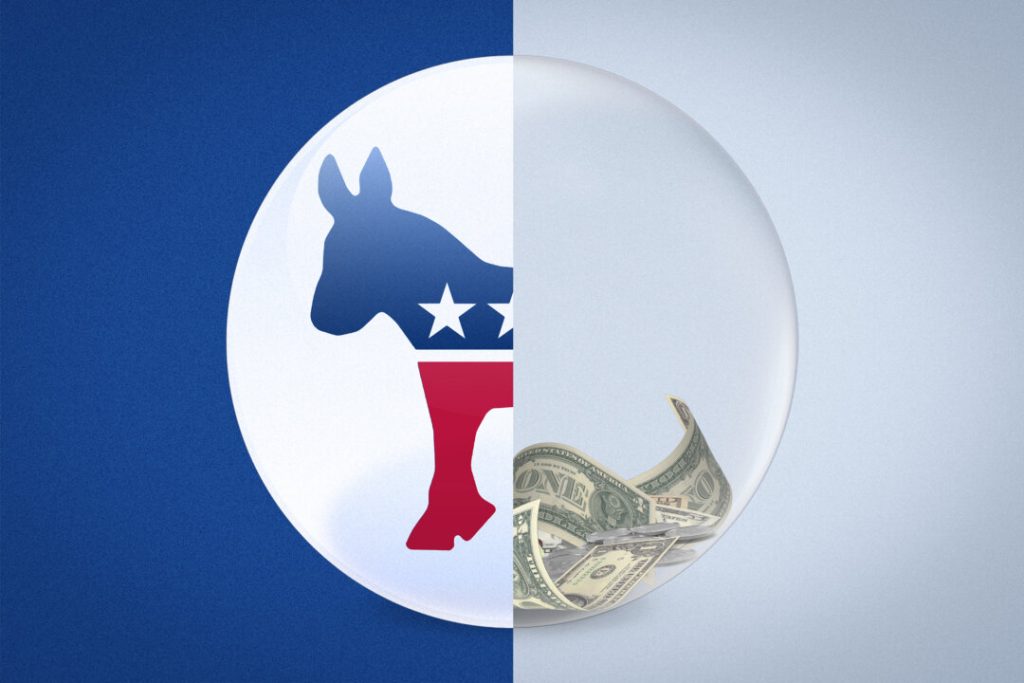
This piece looks at the fundraising picture around Democratic campaigns and party committees, naming the DNC and Hill committees as key players and explaining what their cash positions mean for voters and opponents across the country. It zeroes in on the cash-rich state of many Democratic candidates, the stark $4.5 million shortfall at the Democratic National Committee, and what that contrast suggests about strategy, spending and donor behavior in the 2026 cycle.
Money talks in politics, and right now the Democrats have a mixed message. On the one hand, many Democratic candidates and Hill committees are sitting on healthy bank balances, able to buy ad time, staff and reach into voter pockets. On the other hand, the national party is carrying debt that raises real questions about how efficiently its operation is running and where donors are directing dollars.
“Democratic candidates and Hill committees are flush with cash and no debt. The DNC is also pulling in money—though not as much—and it’s $4.5 million in debt.” That quote captures the odd split: donors are fueling campaigns more than the party apparatus itself. Republicans should point out that grassroots and small-dollar donors who want results send money to candidates, while big-ticket party spending sometimes gets out of hand and leaves the DNC exposed.
There’s a practical impact to which side of the ledger you’re on. Campaigns that are flush can test messaging, lock in early television and digital buys, and hire organizers to build turnout in swing districts. A party committee in debt, however, faces hard choices about where to deploy resources, and those constraints can undercut coordinated efforts the next time the map tightens.
Donor behavior tells a story about confidence and priorities. When money flows more to individual candidates and less to the central party, it suggests donors want direct influence and tangible results from specific offices. That can be an advantage for Republicans who concentrate on accountability and results, because it lets us frame Democrats as decentralized and unfocused while arguing for disciplined spending and targeted voter contact.
From a messaging perspective, this split invites straightforward lines: candidates boasting war chests should be answering for their policy promises, and the central party should be answering for financial mismanagement. Conservatives can press both fronts — challenge policy on the doorstep and question stewardship in party headquarters. It’s a two-pronged approach that voters can understand without jargon.
Internally, the DNC’s debt position raises governance questions that donors and voters ought to ask. Who is setting the budget? Which programs are priorities, and are those priorities producing wins? Republicans can use those questions to call for transparency and fiscal discipline across the political spectrum, reminding voters that balance sheets matter whether the officeholder is in City Hall, the statehouse or leading a national committee.
On the ground, well-funded Democratic candidates still have to convert cash into votes. Money helps, but organizational competence, candidate quality and clear messaging do the rest. Republicans should stay focused on delivering a disciplined ground game and credible alternatives, because cash bought in the wrong places won’t save candidates who can’t connect with everyday concerns.
Looking ahead to the next election cycle, the fundraising pattern could shift quickly if donors see poor returns on their investments. A few high-profile losses could dry up enthusiasm for the national party while strengthening local donor funnels into candidate coffers. That dynamic favors a campaign strategy that emphasizes accountability, smart spending and measurable outcomes.
Finally, this financial split is a reminder that political math isn’t just about sums on a spreadsheet — it’s about choices and incentives. Voters respond to results, and parties that treat money like a resource instead of a trophy stand a better chance of converting dollars into victories. For Republicans, the opening is clear: highlight the inefficiencies and offer a competing vision of fiscal discipline and focused campaigning that resonates with skeptical voters.