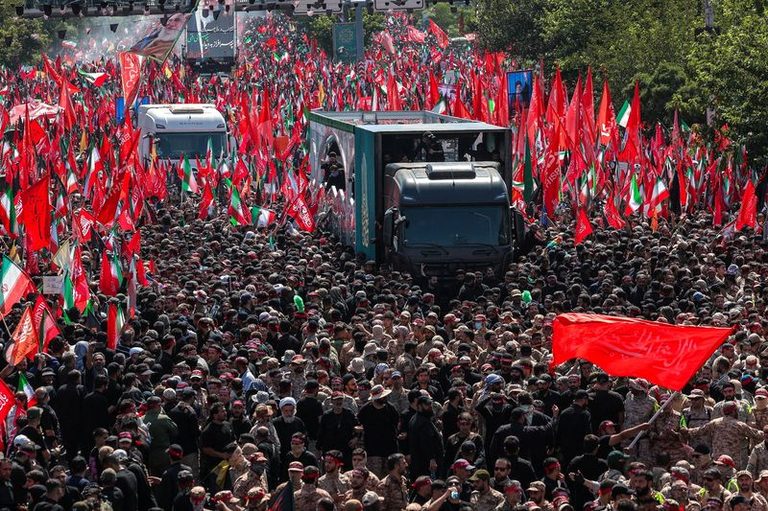
The funeral of late Iranian Supreme Leader Ayatollah Ali Khamenei was more than a national farewell. It sent a message to the United States and Israel that their attempt to break the Islamic Republic had failed. Iran presented itself as defiant, unified, and determined to shape what comes next.
Iran’s Leverage
Iran’s leadership has echoed this position, with Parliament Speaker Mohammad Bagher Qalibaf stating that the Strait of Hormuz is Iran’s greatest power tool and must be properly protected. Iran is deliberately slowing negotiations to lock in what it sees as the war’s dividends before returning to the nuclear question.
According to Tehran’s calculation, Hormuz is the key to its leverage. Sanctions relief and frozen assets are secondary to this goal. Iran is seeking to convert wartime gains into permanent strategic advantage by securing acceptance of its dominant position around the strait.
US-Iran Relations
Washington is likely to have to accept the reopening of the strait under conditions largely dictated by Tehran, analysts say. The US is under more pressure to secure a deal than Iran is to make concessions. Iran knows that President Trump wants to get out and move on, and they can squeeze him because time is on their side.
Original reporting: Appleton, WI News Feed (HLL/CB) — read the source article.