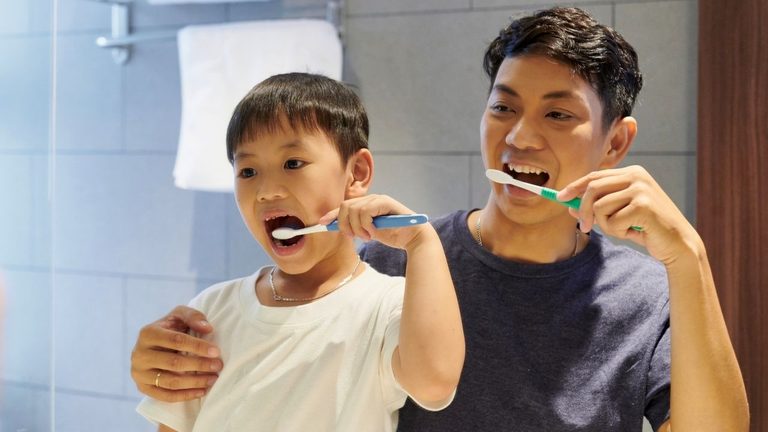
Many Americans are trying a low-effort daily habit to support brain health: brushing their teeth with their non-dominant hand. This practice, which requires more attention and coordination, can activate different neural pathways and encourage neuroplasticity, the brain’s ability to form and reorganize neural connections throughout life.
How it Works
Using the non-dominant hand for familiar tasks like brushing teeth can help strengthen the opposite side of the brain. According to Riddhi Gangolli, BDS, PhD, senior director of professional education and marketing for SmileDirectClub, “Since you’re using the opposite hand, you’re using the opposite side of your brain which can help strengthen that side.”
A paper in the International Journal of Psychological Research described brushing with the non-dominant hand as a neuroplasticity exercise. It noted that the awkwardness initially challenges established motor pathways, potentially leading to new synaptic connections.
Expert Opinions
While experts note that evidence for broad cognitive gains remains limited, the suggestion aligns with general principles of brain adaptability. The American Dental Association (ADA) provides clear guidelines for oral hygiene that pair well with any brushing routine, including brushing teeth twice a day with fluoride toothpaste for two minutes each time.
Health professionals recommend consulting a dentist or physician before making significant changes to routines, especially for those with conditions affecting motor skills or oral health. Trying the non-dominant hand method requires no extra cost or equipment, and users often report that the first few attempts feel clumsy, but coordination improves as the brain adapts.
Original reporting: The Dallas Express — read the source article.