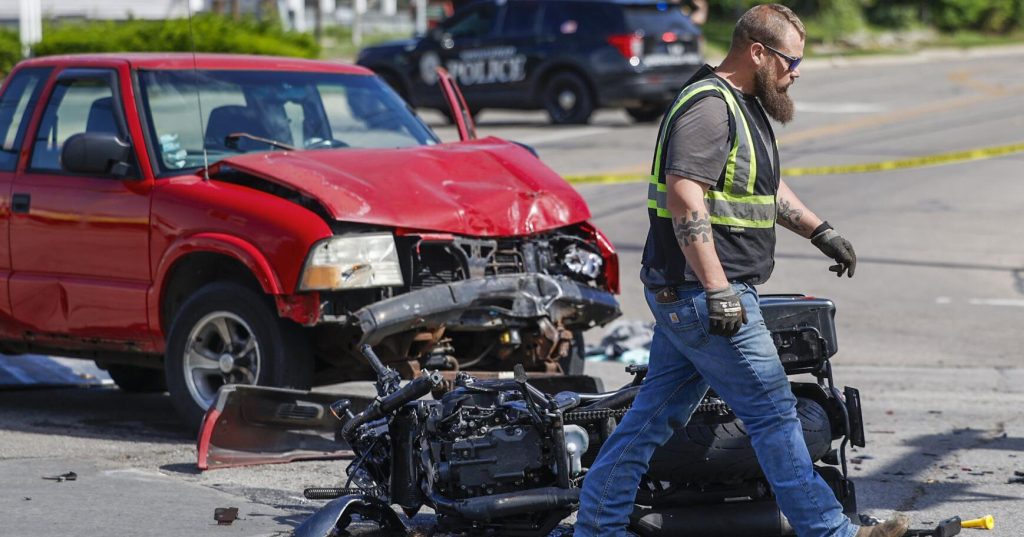
A single paragraph preamble: One person died following a serious crash on Wednesday morning, May 13, at the intersection of East Main Street and Burnett Road in Springfield, where emergency crews responded and the scene drew heavy attention from neighbors and motorists. The collision shut the intersection for hours and prompted an investigation that remains active as authorities work to determine exactly what happened. Local officials confirmed the fatality but have not released the victim’s identity pending family notification and routine post-crash procedures.
The scene at East Main Street and Burnett Road was described by onlookers as grim and chaotic for a time, with first responders from multiple units working to stabilize the situation and clear debris, and traffic diverted while tow trucks and investigators processed the crash. Emergency lights and taped-off lanes marked the area as crews prioritized safety and evidence collection, and residents reported delays that stretched through much of the morning commute. Neighbors said the temporary disruption was intense enough to halt businesses that rely on morning traffic and to reroute buses and delivery vehicles for several hours.
At this point, investigators have not disclosed what led to the crash, and there has been no official statement about whether speed, impairment, distraction, mechanical failure, or road conditions played a role, meaning the cause is still under review. Standard procedures typically include a crash reconstruction, interviews with witnesses, review of any available surveillance or traffic camera footage, and toxicology testing if appropriate, all of which can take days or weeks to yield firm conclusions. Until those steps are completed, officials are limited in what they can say publicly, which can be frustrating for a community looking for answers.
Because the deceased has not been publicly identified, family members and the public are left waiting for confirmation and next steps, a painful ordeal that adds an emotional toll to what is already a practical disruption for nearby residents and businesses. The loss of life in a traffic crash ripples outward—friends, co-workers, and neighbors feel it immediately—so local community groups and informal networks often step in to offer support while formal resources are marshaled. For people who use that intersection regularly, the memory of the scene and the knowledge that a life was lost there will linger long after the roadway reopens.
Traffic impacts were substantial in the immediate aftermath, with commuters forced to find alternate routes and local transit operators adjusting schedules, which underscored how a single event can affect the flow across an entire neighborhood for hours. Those detours also pushed more vehicles onto side streets, raising concerns about increased congestion and the potential for secondary incidents as drivers navigated unfamiliar patterns. Road closures for investigations are necessary but painful, especially for those trying to get to work, school, or appointments, and they highlight the trade-offs that come with thorough crash examinations.
Investigators typically piece together the sequence of events through a combination of physical evidence and human testimony; skid marks, vehicle damage, point-of-rest, and witness accounts all help build a timeline and clarify how forces interacted in the moments before and during impact. When cameras or bystander video exist, those materials can significantly speed reconstruction, but they must be collected, preserved, and analyzed properly to be useful in any formal proceeding. Because the public statement so far has been limited to confirming the fatality, authorities are likely still gathering and verifying such materials before releasing more detail.
Public safety messaging after a crash like this usually emphasizes care on the road—slowing down, avoiding distractions, and being mindful of intersections—because prevention is the most effective way to stop similar tragedies from repeating. For drivers, that can mean adjusting speed to conditions and paying extra attention to signal changes and cross traffic, while for pedestrians and cyclists it means staying visible and predictable when negotiating busy corners. Municipal engineers and planners sometimes take a second look at intersections where serious crashes occur, examining signage, signal timing, sightlines, and crosswalk design to see if modest changes could reduce future risk.
As the investigation continues, local officials have asked anyone who witnessed the crash or has relevant footage to come forward to assist with the inquiry, which is a common request in the aftermath of major collisions and often yields crucial detail. Follow-up steps will likely include a formal police report and, if appropriate, updates to the public once next-of-kin notifications and initial lab results are complete, though the timing of those updates varies depending on workload and the complexity of the case. For now, the community watches and waits while officials continue their work at the intersection of East Main Street and Burnett Road in Springfield.