As America celebrates its 250th birthday, historic sites in Philadelphia are spotlighting the people and places tied to the nation’s earliest days — including one of its most enduring symbols: the American flag. Betsy Ross, a 24-year-old upholsterer, is traditionally credited with sewing what many believe was the first American flag in the summer of 1776 after reportedly being approached by members of a flag committee that included George Washington.
The Story Behind the Flag
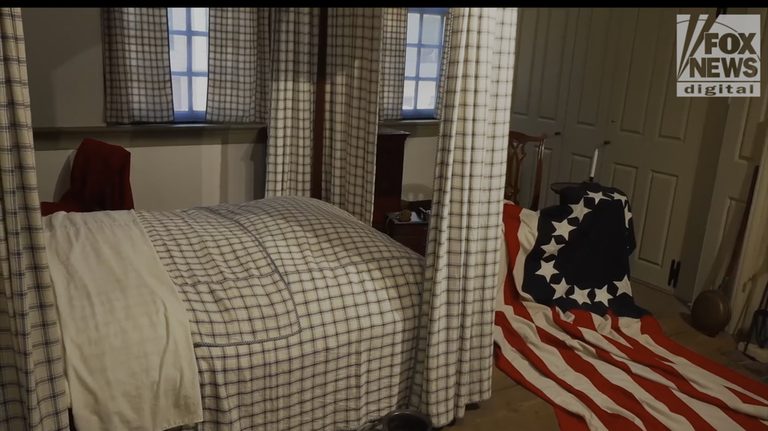
According to Lisa Acker Moulter, director of the Betsy Ross House, the historic site is helping visitors understand how that moment may have unfolded. Ross is believed by tradition to have worked in secrecy, sewing the flag by hand at night — likely in her home rather than in her upholstery shop — and completing it in about a week.
The original design featured 13 stripes representing the colonies and 13 stars arranged in a circle to symbolize equality among them. It was later adopted as the nation’s first official flag after the Continental Congress passed a resolution on June 14, 1777.
Lisa Acker Moulter says the story of Betsy Ross reflects a broader truth about who contributed to America’s founding. It shows that ordinary people can contribute important things to this country as well. You know, this country wasn’t just founded by wealthy, powerful white men, the Founding Fathers. It was women, it was free and enslaved people, it was new immigrants, all of them contributed to the founding of this nation.
The American Flag, a Symbol of Unity
In its early years, the flag was primarily used on battlefields, military forts, and ships as a form of identification. It did not become a widespread symbol of national identity until later in U.S. history. Over time, the flag evolved as new states joined the Union. The first major update came in 1795 with the addition of two stars for Vermont and Kentucky, and the most recent change came in 1960 after Hawaii became the 50th state.
Original reporting: Fox News (HLL/CB) — read the source article.