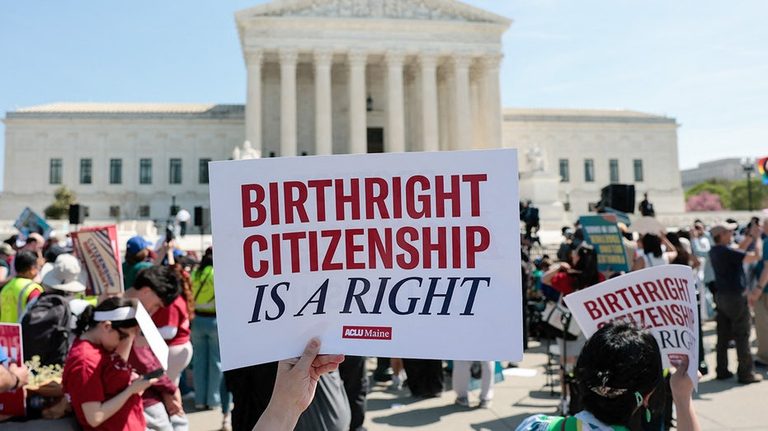
The Supreme Court has made a significant ruling on birthright citizenship, stating that children born in the United States to parents who are illegal immigrants are considered citizens at birth under the Fourteenth Amendment. This decision has sparked controversy and debate on the issue of immigration and citizenship.
Implications of the Ruling
The ruling has implications for illegal immigrants who come to the United States to give birth, with the intention of securing citizenship for their children. This practice, known as birth tourism, has been criticized for taking advantage of the U.S. system and putting a strain on public resources.
Some argue that the ruling will encourage more illegal immigrants to come to the United States, potentially leading to an increase in birth tourism and a strain on public resources. Others argue that the ruling is a necessary step in ensuring that all individuals born in the United States are granted citizenship, regardless of their parents’ immigration status.
Possible Solutions
To address the issue of birthright citizenship, some have proposed legislation that would require at least one parent to be a U.S. citizen or lawful permanent resident in order for a child to be granted citizenship at birth. Others have suggested that the Constitution be amended to clarify the definition of citizenship.
In addition to legislative solutions, some have proposed that the State Department increase visa adjudication standards in countries known to have high rates of birth tourism. This could include requiring women of child-bearing age to show proof of sufficient funds and a clear intention to return to their home country after giving birth.
Original reporting: Fox News (HLL/CB) — read the source article.