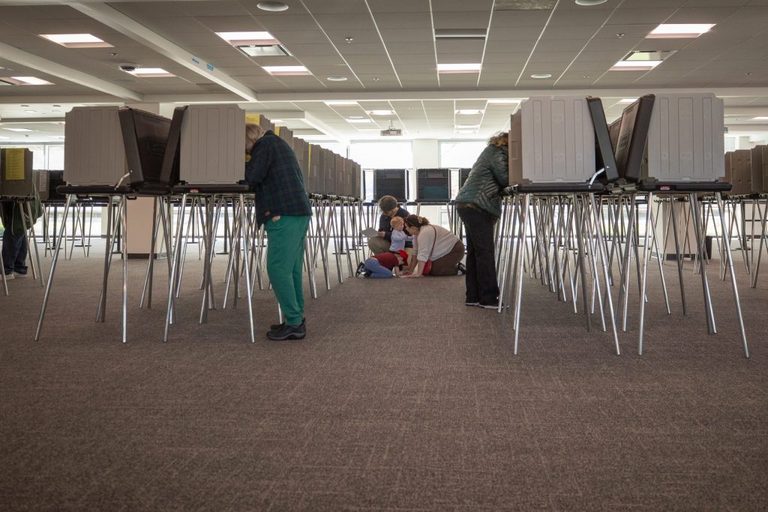
Ohioans cast more Republican ballots during the primary election in May, but Democrats still came surprisingly close. Newly updated state voter data helps illustrate the underlying reasons why.
Shift in Voter Turnout
In the May 5 primary election, 907,273 Ohioans requested Republican ballots while 815,922 requested Democratic ballots, according to the official count from the Ohio Secretary of State’s Office. This was a dramatic change from the 2022 primary election, when Ohioans cast roughly 1.1 million Republican ballots, double the roughly 540,000 ballots that Democrats cast that year.
A Signal Statewide analysis found the shift was driven by two main forces: Republican-affiliated voters turning out at lower rates than their Democratic counterparts, and previously unaffiliated voters choosing Democratic ballots far more often than Republican ones.
Democratic Turnout Surges
Democratic turnout surged despite there being no competitive races at the top of the ticket, a sign of high enthusiasm among these voters. Governor candidate Dr. Amy Acton had no primary opponent while Senate candidate Sherrod Brown only had a nominal one.
Of the 5.7 million unaffiliated voters, about 288,500 requested Democratic ballots in May. These new – or at least previously unengaged – Democrats were especially concentrated in some key areas for the party: the Cleveland/Akron area, Cincinnati, and Columbus.
Local Impact
Cuyahoga County, a Democratic Party stronghold, shows how the statewide pattern played out on a community level. Democratic turnout was up in 56 of 59 of the county’s communities compared to the 2022 primary election.
Overall, 40,262 more Democratic ballots were cast in Cuyahoga County compared to four years earlier, while voters cast 17,729 fewer Republican ones. The county saw the number of registered Democrats rise from 137,865 to 182,112.
Original reporting: Signal Cleveland — read the source article.