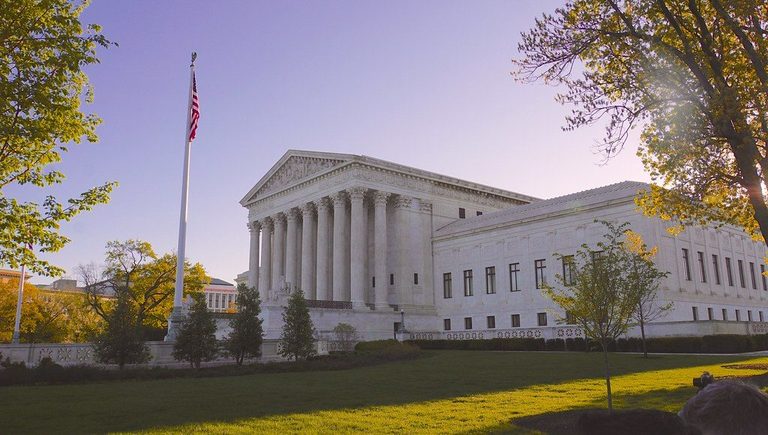
The U.S. Supreme Court concluded its term by issuing several major decisions affecting immigration, school athletics, and federal campaign finance. The Court rejected President Donald Trump’s executive order restricting birthright citizenship, upholding the long-standing interpretation of the 14th Amendment that nearly everyone born on U.S. soil is automatically a U.S. citizen.
Birthright Citizenship
The ruling preserves decades of legal precedent, with limited exceptions such as children born to foreign diplomats or occupying military forces. The administration had argued that children born to parents who are in the United States illegally or temporarily are not “subject to the jurisdiction” of the United States and therefore are not entitled to automatic citizenship under the Constitution.
According to research, more than 250,000 children born in the United States each year would have been affected by the executive order. The Court left intact its long-standing interpretation of the Citizenship Clause, including the 1898 decision in United States v. Wong Kim Ark, which affirmed birthright citizenship for nearly all children born in the United States.
Transgender Athletes
In a separate decision, the Supreme Court upheld laws in Idaho and West Virginia that prohibit transgender girls and women from competing on girls’ and women’s athletic teams in public schools and colleges. The justices ruled that the laws do not violate either the U.S. Constitution or Title IX, the federal law prohibiting sex discrimination in education.
Writing for the majority, Justice Brett Kavanaugh said athletic competition involves limited roster spots and competitive opportunities. “Sports are generally zero sum,” Kavanaugh wrote. “Every biological male who makes the team takes a roster spot from a female athlete. Every biological male who wins a race takes the gold medal away from a female athlete.”
Campaign Finance
The Court also struck down federal limits on how much political parties can spend in coordination with candidates for Congress and president, overturning campaign finance restrictions that had been in place for more than 50 years. The ruling eliminates limits on coordinated spending between political parties and federal candidates, finding the restrictions violate constitutional protections for political speech.
Original reporting: WOWO News/Talk (Fort Wayne) — read the source article.