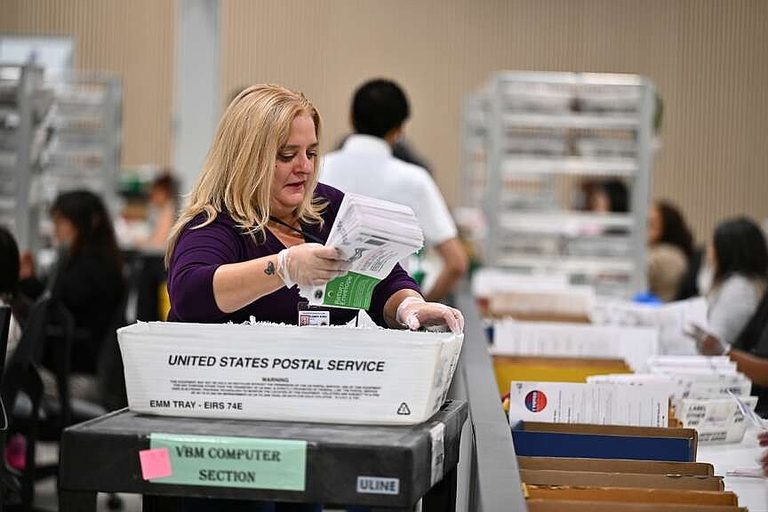
The U.S. Supreme Court has rejected a Republican effort to outlaw the practice of counting mail ballots received after Election Day, delivering an immediate reprieve to the 14 states with grace periods for regular mail ballots. This decision is a significant development in the ongoing debate over election laws and voting rights.
Background
The case centered on a Mississippi law that permits the counting of mail ballots postmarked by Election Day and received up to five days later. The Republican National Committee (RNC) and Libertarian Party had sued to overturn this law, arguing it violated federal law. However, Justice Amy Coney Barrett, writing for the majority, stated that nothing in federal election-day statutes requires ballots to be received by Election Day.
This ruling has implications for states like Texas, which allows mail ballots to be counted if they are postmarked by Election Day and received within a certain timeframe. The decision means that voters in these states will continue to have their voices heard, even if their ballots are received after Election Day.
Reactions
Secretaries of state from various states, including California, Illinois, and Mississippi, have welcomed the ruling, seeing it as a victory for voters and the democratic process. However, President Donald Trump and RNC Chairman Joe Gruters have expressed disappointment, with Trump using the ruling to push for his election law bill that aims to impose stricter voting requirements.
The decision also has significant implications for Native and rural communities, who often rely on mail ballots due to limited access to polling stations. Jacqueline De León, a senior staff attorney with the Native American Rights Fund, highlighted the challenges faced by these communities, including unreliable postal service and lack of access to transportation.
Original reporting: Texarkana Gazette — read the source article.