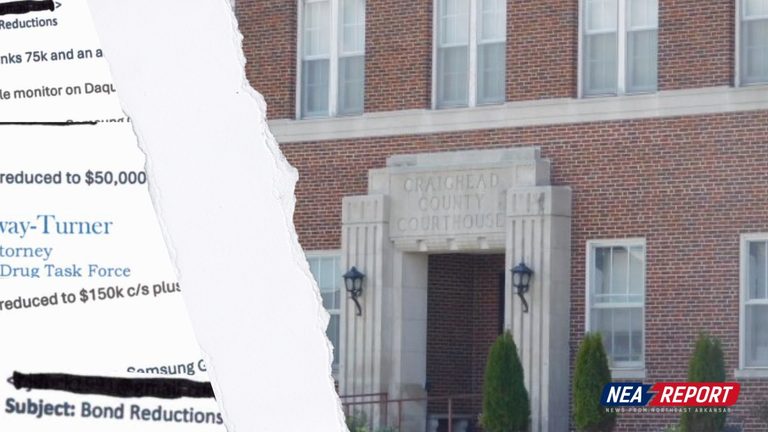
In a surprising revelation, prosecutors in Craighead County, Arkansas, have been lowering bonds without the approval of a judge, contrary to the Arkansas Rules of Criminal Procedure. This practice was uncovered when District Judge Tommy Fowler noticed that a deputy prosecutor had emailed jailers to lower a defendant’s bond without his knowledge or approval.
The Incident That Exposed the Practice
On June 17, Robert Sanders was arrested, and District Judge Tommy Fowler set his initial bond at $250,000 cash or surety. However, before the first court appearance on June 22, a deputy prosecutor emailed jailers to lower the bond to $150,000 without the judge’s approval. When Judge Fowler discovered this, he expressed frustration, questioning the purpose of setting bonds if prosecutors could unilaterally change them.
Further investigation revealed that this was not an isolated incident. Throughout June, the same deputy prosecutor had modified bonds for numerous defendants without judicial approval. In one instance, an email requested bond reductions for 31 different defendants as ‘agreed bond reductions,’ with no mention of a judge’s involvement.
Prosecutor’s Response
Prosecuting Attorney Sonia Hagood acknowledged that the practice was wrong and had been stopped. She explained that some of her deputies, trained by previous administrations, had been taught this practice, which may have been in place for years or even decades. Hagood defended the actions, stating that the goal was to save the county money and manage the jail population, especially given the recent failure of a jail tax to expand the Craighead County Detention Center.
Hagood emphasized that the mistake was in lowering bonds instead of reducing them to own-recognizance, which would have allowed for the release of inmates without the need for a bondsman. She argued that having prosecutors involved in these decisions was preferable, as it ensured that those deemed dangerous would remain in custody while those who were not would be released.
For now, Hagood has assured that the practice has ceased, and all future bond modifications will require a judge’s signature, adhering to the Arkansas Rules of Criminal Procedure.
Original reporting: NEA Report (Jonesboro) — read the source article.