The Supreme Court’s recent decisions on immigration will have significant effects on our border region. One of the cases, Blanche v. Lau, concerned the power of border officials over green card holders. In this case, a lawful permanent resident from China, Muk Choi Lau, had his green card taken away and was allowed to enter the country on parole after returning from a trip to his home country while having a pending criminal case.
Green Card Holders and Border Officials
The Supreme Court ruled that customs officers do not need clear and convincing evidence to find that a green card holder has committed a crime involving moral turpitude, which can lead to deportation. This decision has raised concerns among immigration advocates, who argue that it gives too much discretion to individual border officials.
Frederick Carroll, legal director with the American Civil Liberties Union of San Diego and Imperial Counties, stated that the case does not provide clear standards for when border officials can exercise this kind of power. He advised green card holders to be aware of this case’s outcome before deciding to travel abroad, especially in our region where many cross the border regularly to visit loved ones.
Asylum Seekers and Metering
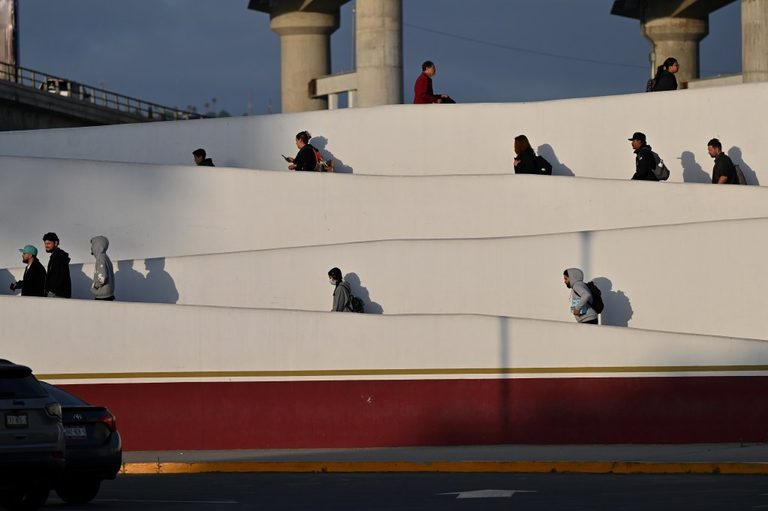
In another case, Mullin v. Al Otro Lado, the Supreme Court sided with the federal government, allowing the practice of metering, or turning away asylum seekers who approach ports of entry to request protection. The court ruled that the law requiring border officials to inspect people arriving in the United States does not apply until the person sets foot on U.S. soil.
Justice Sonia Sotomayor wrote a dissenting opinion, arguing that the majority opinion is illogical and prevents the federal government from following an entire legal system set up by Congress. Erika Pinheiro, executive director of Al Otro Lado, said that the decision violates international law and threatens to serve as a justification for other countries to unlawfully prevent refugees from crossing borders in search of safety.
Temporary Protected Status
In a third case, the Supreme Court allowed the Trump administration to end temporary protected status for Haitians and Syrians. The court found that the law does not allow courts to review executive branch decisions involving temporary protected status unless the case involves questions of constitutionality.
The Department of Homeland Security celebrated the three case outcomes, saying that the court had restored tools that it could use to stop immigration at the border. However, ACLU attorney Carroll said that the three decisions have complicated life for thousands of immigrants around the country, including many in San Diego, who have followed U.S. laws regarding their presence in the country.
Original reporting: Voice of San Diego — read the source article.