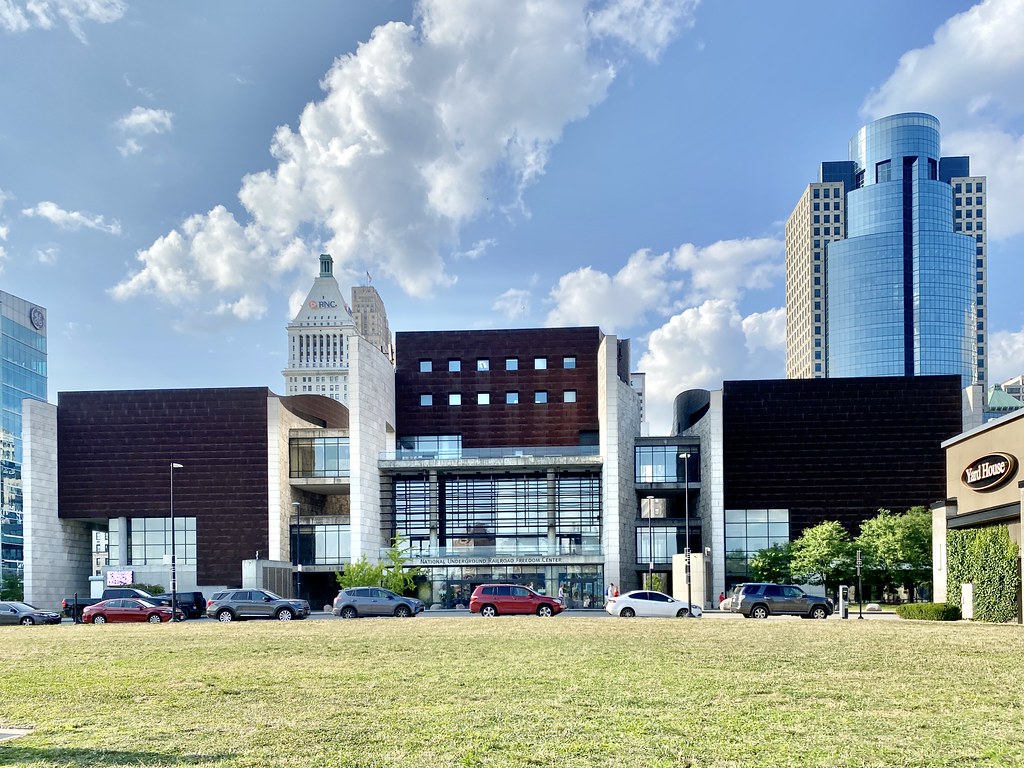
There are museums that inform you, and then there are museums that genuinely change the way you see the world. The National Underground Railroad Freedom Center, perched on the banks of the Ohio River in downtown Cincinnati, belongs firmly in the second category. From the moment you step through its doors, you understand why this building — and this city — occupy such a singular place in American history.
Cincinnati sits right across the river from Kentucky, which means it sat at one of the most consequential borders in 19th-century America: the line between slavery and freedom. Thousands of freedom seekers crossed the Ohio River here, guided by conductors of the Underground Railroad who risked everything. The Freedom Center was built to honor that courage, and it does so with remarkable care and intelligence.
The museum is located at 50 East Freedom Way, right in the heart of the riverfront district near Great American Ball Park. It is easy to reach whether you are staying downtown or coming in from the suburbs, and the surrounding area — with the river glittering just steps away — gives the visit a sense of geographical meaning that you simply cannot replicate anywhere else.
Inside, the experience unfolds across multiple floors of thoughtfully curated galleries. The permanent collection anchors the museum and it is genuinely extraordinary. One of the most powerful artifacts is an actual slave pen — a wooden holding structure used to confine enslaved people — that was discovered in a Kentucky farm in 1987. Standing in front of it, you feel the weight of history in a way that no photograph or textbook ever quite manages. It is sobering, important, and unforgettable.
The storytelling here is both historically rigorous and deeply human. You learn about specific freedom seekers by name, read their words, and follow their journeys. Harriet Tubman, John Parker, Levi Coffin — the figures who shaped this history come alive with context and dignity. The museum also draws connections to modern-day human trafficking and global freedom issues, making it clear that the fight for human dignity is far from over.
Plan to spend at least two to three hours here, and honestly, that might not feel like enough. The rotating exhibitions keep the experience fresh on return visits, and the programming — lectures, film screenings, community events — makes this a living institution rather than a static collection.
Admission is very reasonable for what you receive, and the museum offers discounts for students, seniors, and military families. The gift shop carries thoughtful books, prints, and items that make for meaningful souvenirs rather than the usual trinkets.
Cincinnati has a complicated, layered history, and the Freedom Center embraces that complexity with honesty and grace. Whether you are a first-time visitor to the city or a lifelong resident, this is a place that rewards your attention and stays with you long after you leave. Make the time. Walk down to the river. Let this story find you.