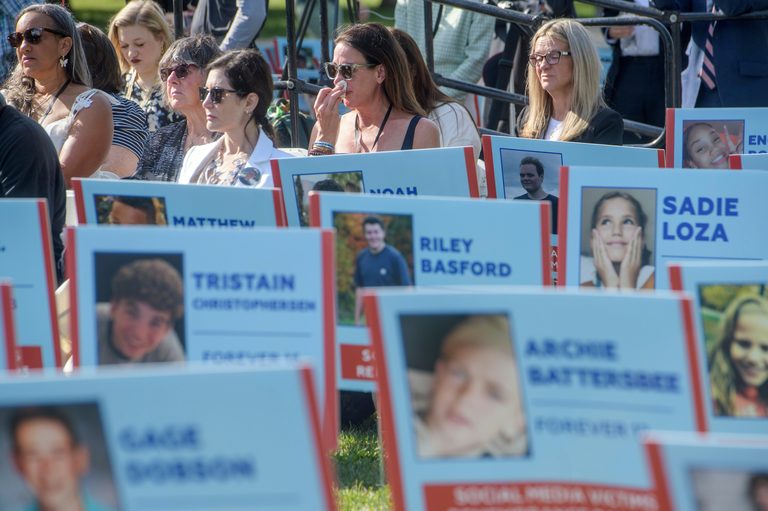
Amy Neville and Kristin Bride, two mothers who lost their teenage sons due to social media-related harms, are advocating for stronger social media safeguards and legislation to protect children online. Their sons, Alexander Neville and Carson Bride, died in 2020, with Alexander being sold a pill by a drug dealer on Snapchat and Carson dying by suicide after severe cyberbullying.
Global Restrictions
Several countries, including Australia, the UK, Turkey, and Indonesia, have implemented bans on children under 16 or 15 from using platforms like TikTok, YouTube, and Instagram. In contrast, the US has been slow to implement similar restrictions.
The US movement has gained momentum with two landmark jury verdicts this year, which showed a way forward for holding tech companies accountable. A bipartisan deal, the Kids Internet and Digital Safety Act, has been unveiled in the House, but critics argue it lacks a crucial provision called ‘duty of care,’ which requires companies to take reasonable steps to prevent harm.
Advocacy Efforts
Advocates, including Neville and Bride, are employing a three-prong approach, utilizing legislation, litigation, and education to push for stronger social media safeguards. They have seen the online child safety movement grow, with scores of parents who lost kids pursuing stronger social media safeguards and legislation to protect children online.
Social media platforms have introduced some safety features, including separating minors into teen accounts and providing tighter restrictions for younger teenagers. However, child advocates argue that there is still a long way to go, as the fundamental incentive to design products that maximize engagement has not changed.
Original reporting: NBC10 Boston — read the source article.