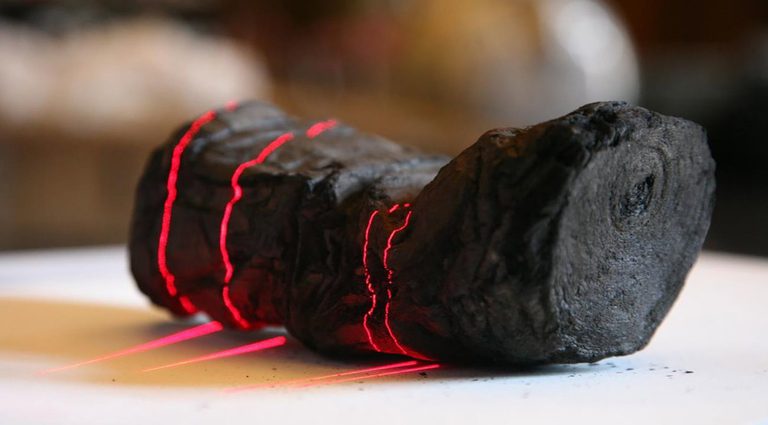
A papyrus scroll that was burned and carbonized when Mount Vesuvius erupted almost 2,000 years ago has been virtually unrolled and partially deciphered with the help of artificial intelligence. The scroll, named PHerc. 1667, is one of hundreds from the ancient Roman town of Herculaneum, which was buried under volcanic debris when Mount Vesuvius erupted in 79 AD.
The Discovery
The scroll was discovered by an Italian farmer in the 18th century and is part of a collection that is the only large-scale library known to have survived from classical antiquity. The scrolls were preserved under mud and ash in a villa believed to have once been owned by the father-in-law of Julius Caesar.
The Vesuvius Challenge, an initiative focused on decoding the texts of the Herculaneum scrolls without needing to physically unroll them, was launched by Brent Seales, a computer science professor at the University of Kentucky, and entrepreneurs Nat Friedman and Daniel Gross in 2023. Virtual unwrapping begins with a CT scan of each coiled-up, warped papyrus. After following along the curved layers in the scan, researchers then virtually flatten the scrolls and explore them using advanced AI that has been trained to identify ink on the page.
The Breakthrough
For the first time, scientists have succeeded in fully unwrapping one scroll, revealing an area measuring almost 1.5 meters of text across 20 columns. The text appears to be a philosophical discussion of ethics, arts, and human behavior, probably reflecting Stoic thought. The newly translated text includes the line: “We will inquire into something, but we will not grasp it, if in some way we depart from ourselves and from our own nature.”
Original reporting: KEYT (Ventura/Santa Barbara) — read the source article.