Healthcare affordability remains a top concern for voters as the 2026 election approaches. An Oct. 6 KFF Health Tracking poll found that six in ten voters are worried about paying for health care, and nearly half say the issue is extremely important for candidates to address.
Key campaign messages
Across the country, candidates are framing their health‑care platforms with three main slogans:
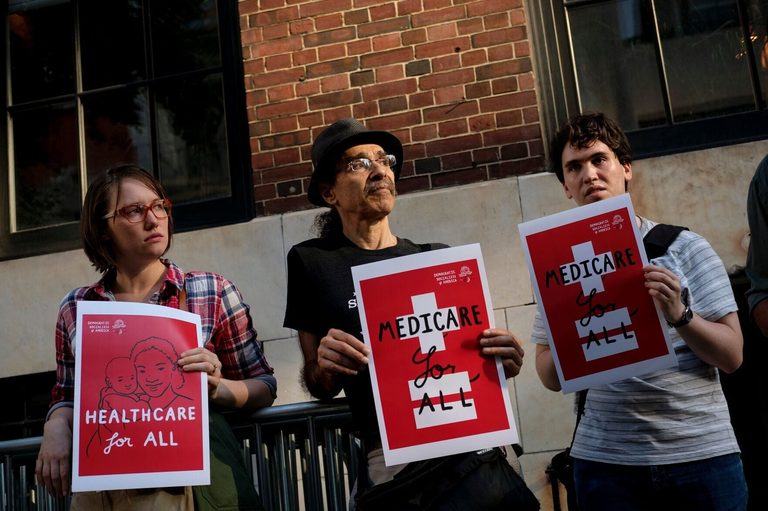
- “Medicare for All” – a proposal for a single‑payer, government‑run system that would provide universal coverage, modeled on Medicare.
- “Lower health‑care costs” – an affordability focus that targets premiums, out‑of‑pocket expenses, and prescription‑drug prices without overhauling the entire system.
- “Take on Big Pharma” – a pledge to curb the pricing power of large pharmaceutical companies.
Public support for Medicare for All
The KFF poll shows 66% of Americans now back Medicare for All, an all‑time high since the survey began in 2016. Support is strongest among Democrats (84%), followed by independents (72%) and Republicans (34%).
Proposals vary, but most envision comprehensive coverage with little or no premiums, deductibles, or copays, and give the government greater leverage to negotiate drug prices.
Candidate examples
Medicare for All
- Michigan Senate candidate Abdul El‑Sayed (D) proposes expanding Medicare to cover vision, dental, and hearing without premiums or copays.
- New Hampshire House candidate Carleigh Beriont (D) backs a single‑payer system that includes vision, dental, and mental‑health benefits.
- Illinois Lt. Gov. Juliana Stratton (D) frames health care as a right and highlights her work lowering prescription‑drug costs.
- Massachusetts House candidate Dan Koh (D) would automatically enroll Americans while allowing them to keep private insurance if they wish.
Lower health‑care costs
- Minnesota gubernatorial candidate Amy Klobuchar (D) emphasizes lowering premiums, drug prices, and protecting access, while opposing a single‑payer system.
- Arizona Senator Mark Kelly (D) focuses on drug‑price negotiation, capping seniors’ out‑of‑pocket costs, and protecting veteran benefits.
- Georgia gubernatorial candidate Republican Rick Jackson proposes using technology to cut out middlemen, lower prescription costs, and expand services in rural areas.
Take on Big Pharma
- Texas Senate candidate Ken Paxton (R) says he will work with President Trump to “Make America Health Again,” increasing transparency and putting consumers ahead of corporate profits.
- New Hampshire Senate candidate Chris Pappas (D) points to legislation that lets Medicare negotiate lower prices, caps insulin at $35, and urges the Trump administration to make drug‑pricing deals more transparent.
- Georgia Senator Jon Ossoff (D) highlights a $2,000 annual out‑of‑pocket cap for Medicare recipients and a $35 monthly insulin cap.
- Iowa Senate candidate Ashley Hinson (R) pledges to “put the squeeze on Big Pharma and big health‑insurance companies” to lower drug prices and premiums.
What voters can do
To learn more about candidates’ health‑care positions, voters should start with their state or local election office. Resources such as the U.S. Election Assistance Commission, Can I Vote, and the League of Women Voters’ VOTE411 tool can help voters find official information and compare platforms.
Original reporting: KTBS 3 (Shreveport) — read the source article.