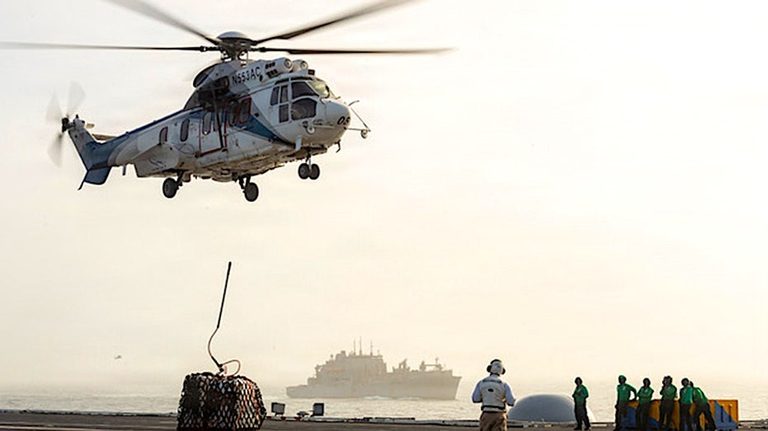
President Trump’s Navy has positioned the aircraft carrier USS George Washington in the Arabian Sea, close to the strategic Strait of Hormuz. The carrier, CVN‑73, replaced the USS Abraham Lincoln and arrived after a recent port call in Vietnam.
Readiness and morale
Capt. Nicholas DeLeo, commanding officer of the ship, told Fox News Digital that morale remains high. He praised the crew’s dedication in flight operations, ship maintenance, and mutual support, saying the spirit on board keeps the sailors “ready and resilient.”
Rear Adm. Jeff Heames, commander of Carrier Strike Group 5, echoed that sentiment, noting the team is “determined, resourced, and prepared for sustained operations.” The group includes the guided‑missile cruiser USS Robert Smalls and the guided‑missile destroyer USS Shoup.
Mission under CENTCOM
The carrier strike group now falls under U.S. Central Command (CENTCOM). Former CENTCOM commander Gen. Joseph Votel emphasized the importance of maintaining credible military capability in the Middle East, calling the carrier’s presence a “good example” of that commitment.
Aircraft and operations
USS George Washington hosts roughly nine operational squadrons, including F/A‑18E/F Super Hornet strike fighters, F‑35C Lightning II stealth fighters, EA‑18G Growler electronic‑warfare aircraft, and E‑2D Advanced Hawkeye early‑warning planes. Helicopter assets such as the MH‑60S and MH‑60R Seahawk support anti‑submarine and search‑and‑rescue missions.
Last week, Lt. Steven Frazier of Strike Fighter Squadron 147 achieved the carrier’s 200,000th arrested landing in an F‑35C, highlighting the ship’s ability to land an aircraft roughly every minute, averaging 70 landings per day.
Logistics and crew welfare
Despite Russian propaganda suggesting poor rations, crew members report abundant food options. Culinary Specialist 2nd Class Victoria Marc said the ship prepares about 15,000 meals daily for its sailors, with three meals plus night rations available around the clock.
Centcom images show the carrier being replenished at sea twice in four days, receiving roughly 2,000 pallets of supplies, including fresh food and ammunition, via helicopter from a nearby supply ship. As a nuclear‑powered vessel, the carrier does not require refueling at sea.
Historical note
The ship’s keel was laid on August 25, 1986, and today the carrier supports roughly 5,000 men and women as a key element of U.S. force posture in the Middle East.
Original reporting: Fox News (HLL/CB) — read the source article.