In a Friday announcement that resonated strongly with South Florida’s sizable Venezuelan community, President Trump declared that the United States has secured a majority stake in Venezuela’s proven oil reserves. The deal, described by the president on Truth Social as a “gift from Venezuela,” would give the United States 55% of the oil produced from more than 65 billion barrels of proven reserves.
Deal structure and expected benefits
Under the agreement, a newly created company will hold the concessions for a 100‑year term. The United States will receive its share of production at cost, allowing the government to channel the oil directly into the Strategic Petroleum Reserve. Trump said the arrangement could increase global oil supply and, over the long term, help bring down gasoline prices for American drivers.
Political support and criticism
Secretary of State Marco Rubio praised the pact as a major win for both Americans and Venezuelans, noting that it could attract nearly $100 billion in private investment to Venezuela. Interim Venezuelan leader Delcy Rodríguez also welcomed the agreement, calling it a new era of recovery, growth, production, security, and prosperity.
Nevertheless, some members of Congress have voiced concerns. Representative María Elvira Salazar, while supporting the deal, questioned whether Rodríguez has the authority to negotiate such a long‑term commitment. Salazar warned that a 100‑year contract requires strong democratic institutions, the rule of law, and free elections in Venezuela.
Local reaction in South Florida
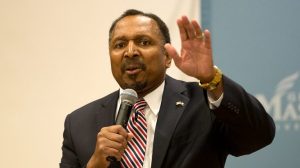
The announcement has drawn particular attention in South Florida, home to a large Venezuelan diaspora. During a visit to Doral, Republican gubernatorial candidate Byron Donalds expressed his support for the agreement, emphasizing the potential for job creation and energy security.
Analyst Salim Daher echoed the optimism, suggesting the deal could provide the United States with a more stable source of oil while delivering investment and employment opportunities to Venezuela.
Opposition and broader concerns
Critics argue that the United States should prioritize restoring democracy in Venezuela before committing to a century‑long partnership that involves the country’s oil industry. They caution that the long‑term nature of the deal could lock the United States into a relationship with a regime that has yet to demonstrate consistent respect for democratic norms.
Despite the debate, the administration frames the agreement as a strategic move to enhance national energy security and reduce reliance on less stable sources of oil.
What’s next?
The agreement still requires further legislative and regulatory steps before it can be fully implemented. Lawmakers are expected to scrutinize the terms, especially the 100‑year concession, to ensure it aligns with U.S. interests and constitutional principles of responsible foreign policy.
Original reporting: NBC6 Miami — read the source article.