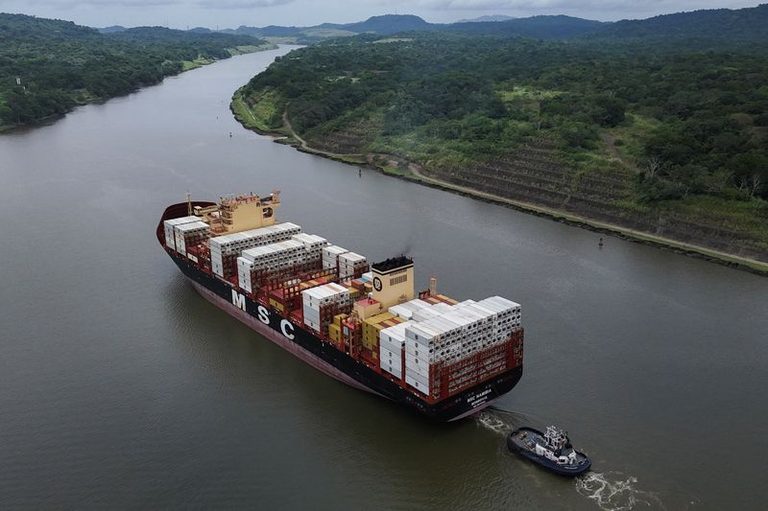
Panama City – The freshly appointed head of the Panama Canal Authority, Ilya Espino de Marotta, told Reuters that the long‑term water‑security project at Rio Indio will eventually eliminate the need for draft or transit restrictions, even during severe droughts.
Short‑term challenges remain
Until the reservoir is finished, the canal may still have to tighten quotas if rainfall in September, October and November falls short. Espino de Marotta explained that the three‑month window is critical for deciding whether additional limits will be imposed on the January‑March shipping season.
Rio Indio reservoir: a 50‑year safeguard
The Rio Indio reservoir is designed to store enough fresh water to support canal operations and provide drinking water for more than half of Panama’s population for the next half‑century. Construction is expected to take five to six years, after which the authority says the canal will no longer need to resort to draft reductions or transit caps.
Why water matters for the canal
Unlike the Suez Canal, which relies on sea water, the Panama Canal depends on fresh water to fill its three lock chambers each time a ship passes. The locks lift vessels between the Pacific and Atlantic oceans, using gravity‑fed water from the Gatun and Alajuela reservoirs. Each transit releases millions of liters, making water availability a constant operational concern.
During an El Niño‑driven dry spell, the canal authority recently postponed a planned reduction in the maximum authorized draft for its Neopanamax locks. The move reflects confidence that existing water reserves will hold, but it also underscores the urgency of completing the Rio Indio project.
Economic stakes
The Panama Canal handles roughly 3 % to 5 % of global maritime trade. When water levels dip, ships may have to travel with reduced cargo loads, affecting shipping costs and supply‑chain timelines. Some carriers have already paid over $1 million at auction for guaranteed transit slots, highlighting the premium placed on reliable passage.
By securing a stable water supply, Panama aims to protect both its national economy and the broader international trade network that depends on the canal’s efficiency.
Looking ahead
Espino de Marotta emphasized that the Rio Indio reservoir will be a cornerstone of Panama’s water strategy for decades to come. While the project’s five‑year construction horizon means short‑term restrictions may persist, the long‑term outlook is one of resilience against climate‑driven droughts.
Stakeholders, from local communities to global shippers, will be watching the progress of the reservoir closely, as its completion promises to safeguard one of the world’s most vital maritime arteries.
Original reporting: Appleton, WI News Feed (HLL/CB) — read the source article.