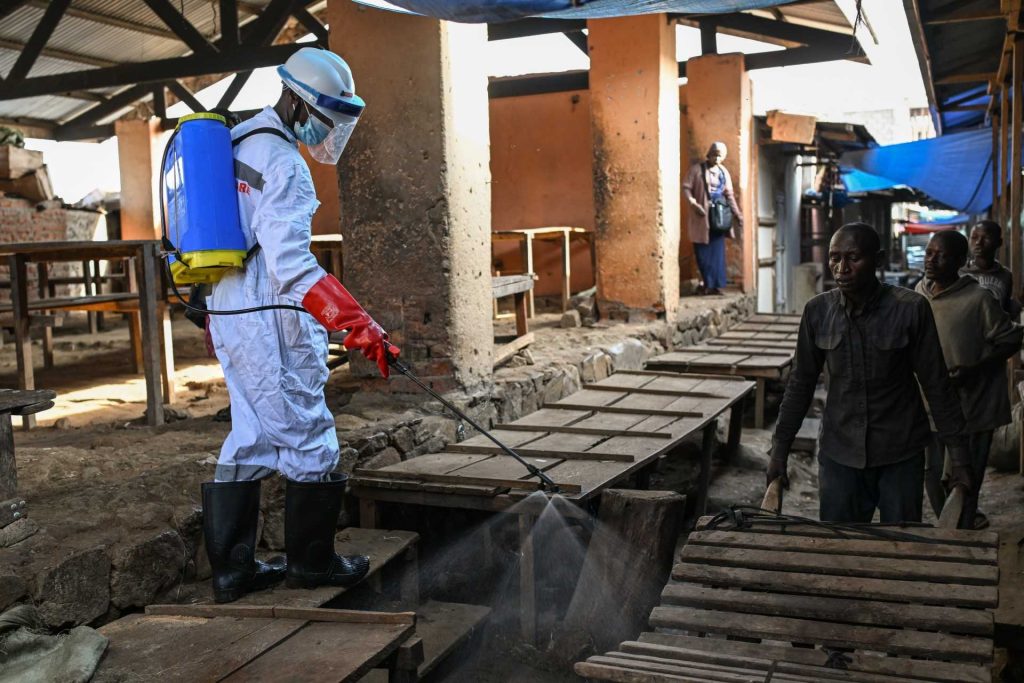
Eastern Congo is grappling with a severe Ebola outbreak, exacerbated by international aid cuts and local unrest. The outbreak, centered in the Ituri province, has seen over 900 suspected cases, with the Congolese authorities reporting 119 suspected deaths. This health crisis unfolds in a region already plagued by violence and displacement, with nearly a million people forced from their homes due to ongoing conflicts.
Challenges in Eastern Congo
The region has long been troubled by attacks from various rebel and militant groups, including the Rwanda-backed M23 rebels and the Allied Democratic Forces, a Ugandan Islamist group linked to IS. These groups contribute to the instability that complicates the response to the Ebola outbreak. The presence of these groups has led to a lack of security, causing healthcare workers to flee and leaving health facilities overwhelmed.
The situation is further complicated by the burning of Ebola treatment centers in areas with the highest case counts. This reflects the anger and skepticism of local communities towards foreign aid groups and the government’s handling of the crisis. The strict protocols around the burial of Ebola victims, aimed at preventing the spread of the disease, have also fueled local tensions.
Impact of Aid Cuts
International aid cuts by the United States and other nations have significantly reduced the capacity to respond to infectious disease outbreaks in eastern Congo. Aid groups on the ground report a lack of essential equipment, such as protective gear for health workers and materials for safe burials. The Bundibugyo strain of the Ebola virus responsible for this outbreak has no approved vaccine or treatment, making the situation even more dire.
Despite these challenges, the Congolese government, along with various aid agencies, continues to manage the outbreak. However, the involvement of rebel authorities in some areas adds another layer of complexity to the response efforts.
Original reporting: KOAT Albuquerque — read the source article.