I lay out a clear scene: President Donald Trump, former President Barack Obama, Attorney General Eric Holder, acting Attorney General Todd Blanche and former FBI Director James Comey are all playing roles in a federal fight over prosecution and power. The White House publicly slammed Obama after his comments on prosecutorial independence, and social media and legal moves have kept the debate loud and raw across the country. This article walks through those back-and-forths, the historical context with Eric Holder, and recent charges involving James Comey.
The White House response was blunt and personal, calling former President Barack Obama “a classless moron” suffering from “a severe and debilitating case of Trump Derangement Syndrome” after Obama criticized the idea of a president directing prosecutions. White House spokesperson Davis Ingle doubled down, saying, “He is a total disgrace for all the division he has sowed upon this country, and history will not judge him well.” That tone set the partisan stage immediately, framing Obama as someone out of touch with how this administration says it works.
Obama’s remarks came during an interview with Stephen Colbert, when the late-night host asked what limits should be placed on presidential power. “The White House shouldn’t be able to direct the attorney general to go around prosecuting whoever the president wants prosecuted,” Obama said. “The idea is that the attorney general is the people’s lawyer, it’s not the president’s consiglieri.”
The former president took care to separate policy advice from prosecution, pointing out that advising on broad legal strategy is different from deciding criminal charges. “That’s different than who do you charge, what case do you bring,” he said, drawing a line most Americans expect to be there. For conservatives, though, that line gets tested when political rivals are under investigation.
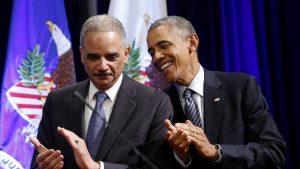
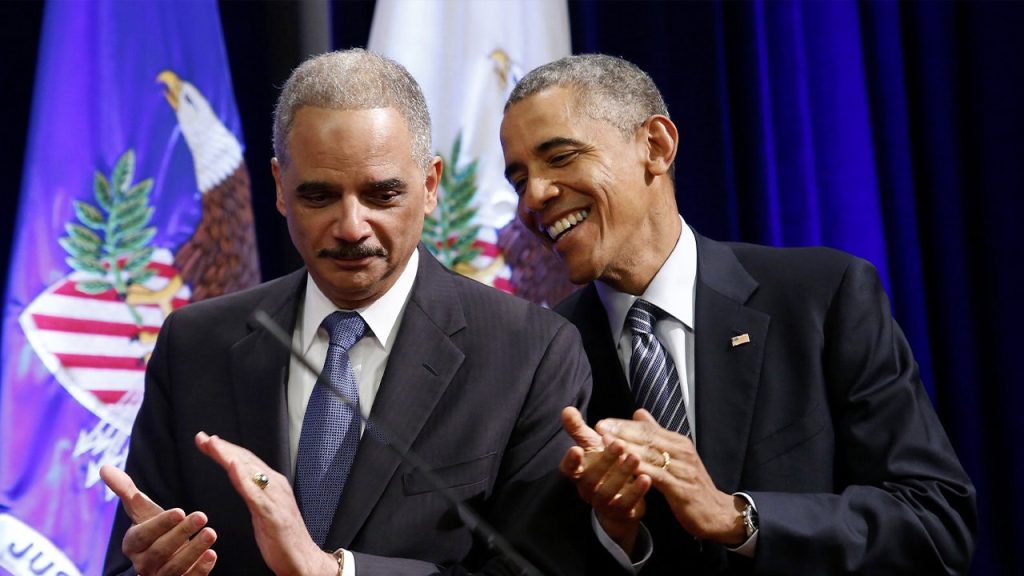
Republican supporters of Trump pushed back hard on social platforms, highlighting past comments from Eric Holder that undercut Obama’s clear separation claims. In a 2013 radio interview with Tom Joyner, Holder said, “I’m still enjoying what I’m doing, there’s still work to be done. I’m still the president’s wingman, so I’m there with my boy. So we’ll see.” That line gave critics something to point to when arguing the Obama-Holder relationship was unusually close.
Holder’s time as attorney general came with its own controversies, like being held in contempt for not producing documents related to Operation Fast and Furious. Critics have long argued he exercised prosecutorial discretion in politically charged ways, even when federal oversight pushed back. Observers on the right see those episodes as examples of how justice can be perceived as selective when it intersects with politics.
Fast forward to today, and acting Attorney General Todd Blanche has charged James Comey for a social media post that the government says threatened the president. The indictment centers on an Instagram image with a seashell pattern reading “86-47,” which prosecutors interpret as a message about removing President Trump from office. Those charges come after the Justice Department had dismissed earlier counts against Comey, and they have reignited debates about political prosecutions and free speech.
Beyond Comey, several of Trump’s critics and former rivals have faced legal scrutiny, including John Bolton and Letitia James. The Justice Department has even opened probes touching figures at the Federal Reserve, like Jerome Powell and Lisa Cook, signaling that no realm of public life is immune from investigation. For many Republicans, seeing investigations touch so many Democrats and institutions confirms a belief that the rule of law must be applied evenly, not weaponized.
Trump himself fanned the flames with a Truth Social post that directly addressed former Attorney General Pam Bondi, asking her to take action against political opponents. “Pam: I have reviewed over 30 statements and posts saying that, essentially, ‘same old story as last time, all talk, no action. Nothing is being done,” Trump wrote. “What about Comey, Adam ‘Shifty’ Schiff, Leticia??? They’re all guilty as hell, but nothing is going to be done.” That post illustrates how the president openly pressures allies to pursue cases, which critics say crosses a dangerous line even as supporters call it accountability.
At stake is the institution of the Justice Department and the public’s trust in impartial law enforcement. Republicans argue the current administration is focused on rooting out corruption and bringing balance to federal accountability, while Democrats see politicization of prosecutions as a threat to democracy. The clash is unfolding in court filings, in late-night interviews, and across social platforms, and it shows no signs of cooling down.