Get there before ten on a Saturday and the parking lot on Fairfield Avenue is already half full. That’s not an accident. The regulars who shop the Fairfield Avenue Antique Mall in Bridgeport’s Black Rock neighborhood know that the good furniture moves fast, and the dealers who set up early are the ones willing to deal.
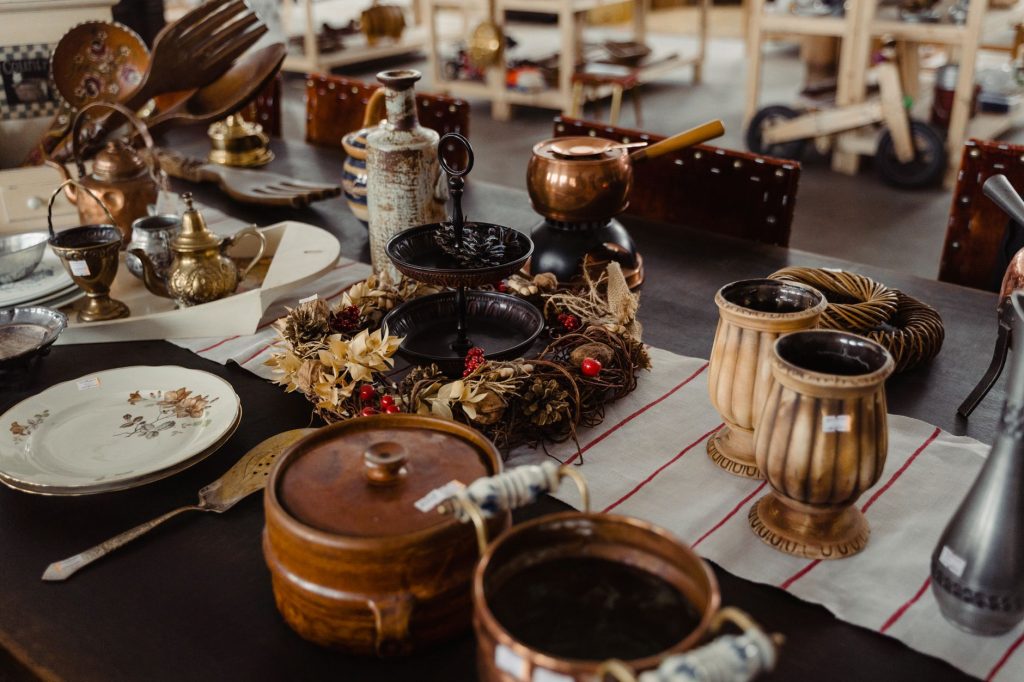
The building is a converted commercial space, wide-floored and fluorescent-lit, divided into individual vendor booths that each read a little differently. One booth runs toward Depression-era glassware and ceramic kitchenware stacked in careful rows. The next one over spills out into mismatched furniture — a pressed-tin ceiling tile leaning against a mid-century dresser, a crate of 45s tucked underneath. There’s no imposed theme to the place, which is either its charm or its challenge depending on what you came for.
Roughly fifty vendors cycle through on a given weekend, though the number shifts seasonally. Fall tends to bring out more estate-sale material — full sets of dishes, wool blankets, old hand tools with solid handles. Summer leans lighter: paperbacks, framed prints, vintage barware. The mix on any given Saturday is genuinely unpredictable, and that’s the point.
Pricing is realistic rather than aggressive. A stack of Life magazines from the 1960s might run you a dollar each. A solid oak side table in decent shape could be anywhere from thirty-five to eighty dollars depending on the vendor and how long it’s been sitting. If something’s been there for a few weeks and you ask politely, most dealers will come down. The vendors here are not the type to price things in anticipation of negotiation — they tend to price near what they want and take offers seriously rather than theatrically.
The store itself takes a small commission from booth sales; you’re dealing with individual vendors, not a single owner. That means if you have a question about provenance or condition, you either find the dealer on-site — many of them are present on weekends — or you ask the floor staff, who generally know who’s responsible for what section.
It’s worth walking the whole floor before committing to anything. The layout doesn’t sort itself logically, so a bookshelf worth considering might be two aisles away from the section that first caught your eye. Cash is preferred, though most vendors now accept cards via mobile readers. The main space is accessible, with wide enough aisles for most mobility needs, though some of the booth arrangements get tight.
Fairfield Avenue itself is worth a few extra minutes. There’s a decent coffee spot within walking distance, and the neighborhood has enough foot traffic on weekends to make a Saturday morning feel like an actual outing rather than an errand. For anyone who finds larger antique fairs overwhelming or overpriced, this place hits a more practical register — real stuff at honest prices, without the fair-circuit markup.
Hours are roughly ten to five on weekends, shorter on weekdays. It’s worth calling ahead if you’re making a special trip, since holiday closures can be inconsistent. Admission is free.