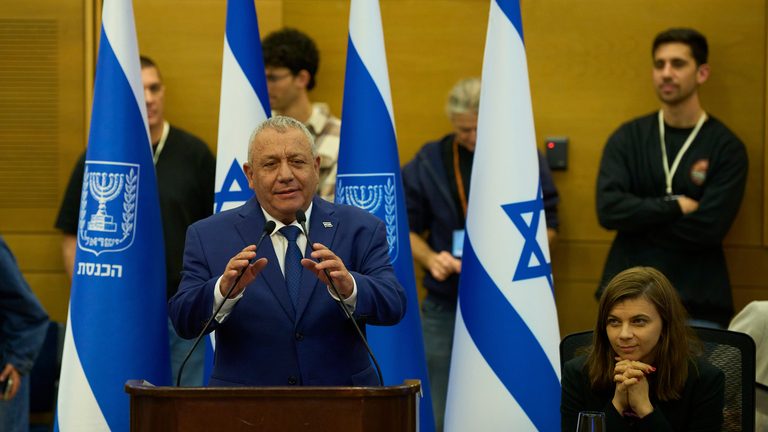
Tel Aviv – The latest attempt to forge a unity government in Israel collapsed on Sunday, when Prime Minister Benjamin Netanyahu and opposition leader Gadi Eisenkot failed to reach a deal after a two‑hour meeting. The talks, which began with a security briefing, ended without an agreement and no further meetings are scheduled.
Stalled Negotiations and Political Deadlock
Netanyahu, Israel’s longest‑serving prime minister, had hoped Eisenkot would accept a rotation arrangement that would allow him to serve as prime minister first, then step aside for Eisenkot. Eisenkot, tasked by the president to form a new government after inconclusive elections, is now pursuing a coalition without Netanyahu and may announce a new cabinet as early as this week.
Both leaders fell short of the 61‑seat majority required in the 120‑member Knesset, leaving the country without a clear post‑election path. Eisenkot must either present a government by Friday or request an extension until Dec. 20.
Security Concerns and Regional Tensions
Political scientist Gayil Talshir of Hebrew University warned that Netanyahu may try to use a renewed conflict with Iran to bolster his standing. She said, “Netanyahu doesn’t know how to lose with respect, and he’s going to fight,” adding that he could lash out against the ultra‑Orthodox, Arab parties, and possibly Iran.
Recent reports indicate Netanyahu has sent Mossad chief Roman Gofman to meet U.S. officials, seeking American support for a possible strike on Iran. The Trump administration, dealing with midterm setbacks, has so far been reluctant to endorse new combat operations.
Domestic Policy Disputes
Negotiations also touched on contentious domestic issues, including mandatory military service for ultra‑Orthodox Jews and a state‑led investigation into security failures surrounding the Oct. 7, 2023 Hamas attacks. Eisenkot’s bloc remains divided over whether to include Arab‑led or ultra‑Orthodox parties in a potential coalition.
Critics of Netanyahu argue his hard‑line stance against partnering with Arab‑led parties threatens Israel’s future stability. Yousef Jabareen, leader of the Joint List, called for a swift ouster of Netanyahu, saying, “It’s time to fulfill the shared will of the entire public — Jews and Arabs alike — and oust Netanyahu this week.”
Implications for Israel’s Future
The failure to secure a unity government prolongs political uncertainty and may affect Israel’s ability to address security challenges, including the ongoing threat from Iran and the aftermath of the Gaza conflict. Without a stable coalition, policy implementation and diplomatic initiatives could face further delays.
As the deadline approaches, both Netanyahu and Eisenkot face pressure from their respective supporters and from the broader public, which remains divided over the best path forward for the nation.
Original reporting: Allentown News – 6abc Philadelphia — read the source article.