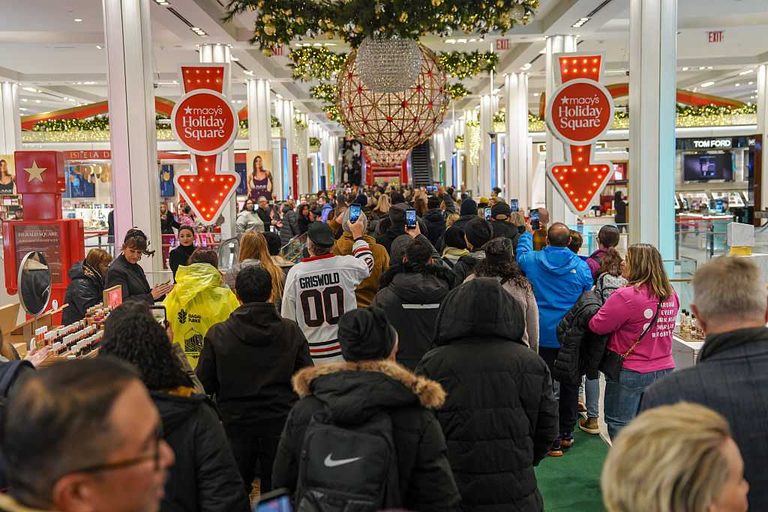
Despite inflationary pressures, American consumers showed resilience on Black Friday, with total retail spending up nearly 6% compared with the same day last year, according to a Mastercard SpendingPulse analysis.
Tech products power the growth
Electronics and software led the increase, with spending in those categories climbing 7.9% year‑over‑year. The surge coincided with the release of the highly anticipated video game Grand Theft Auto VI, which generated close to $4 billion in sales.
“Black Friday showed an adaptable consumer who remains willing to spend while being thoughtful about where, when and how they do so,” said Michelle Meyer, chief economist at the Mastercard Economics Institute, in a news release.
Other retail segments also see gains
Apparel sales rose 4.4% and jewelry sales increased 4.6% year‑over‑year, according to Mastercard data that excludes gas and auto purchases and is not adjusted for inflation.
The National Retail Federation (NRF) had projected that about 183 million people would shop during Thanksgiving weekend, a slight dip from the 187 million expected the prior year. NRF Vice President of Industry and Consumer Insights Allison Zeller noted, “Shoppers are looking for deals, and retailers are delivering great value on gifts while creating special experiences that keep the Thanksgiving weekend shopping tradition going.”
In‑store and online trends
Even with inclement weather and widespread power outages, in‑store spending rose 3.8% on Black Friday, marking the strongest increase since 2022. Global online sales reached nearly $83 billion, according to Salesforce, while Shopify‑based merchants reported $7.6 billion in sales—a 21% jump from the previous year.
Artificial intelligence tools are becoming a larger part of the shopping experience. More than half of NRF‑surveyed consumers said they plan to use AI for budgeting, product recommendations, and brainstorming gift ideas. Leading tech firms such as Meta, OpenAI and Amazon are competing for attention with AI agents like Meta’s Muse, which logged 10 million U.S. downloads in its first 40 days, and Amazon’s newly launched Alexa for Shopping.
Shoppers who used an AI agent spent an average of $209 per order, 48% higher than those who did not, according to Salesforce data.
Looking ahead to Cyber Monday
Online spending on Black Friday rose to $13.1 billion, an 11.1% increase from last year, and Adobe Analytics projects Cyber Monday sales to reach $15.1 billion.
While a modest slowdown is expected after Black Friday, Meyer anticipates a “typical moderation” before a final push in the weeks leading up to Christmas, driven by shipping cut‑offs and last‑minute in‑store purchases.
Original reporting: KOAT Albuquerque — read the source article.