Howe Caverns sits about forty minutes southwest of Albany, out past Cobleskill on Route 7, and it has been pulling visitors off the highway since 1929. The caverns themselves go back a good deal further than that — roughly six million years, give or take — but the operation tourists know today, with the elevator descent and the underground lake and the low-ceilinged passages lit in amber and blue, opened to the public during the Hoover administration and has stayed open more or less continuously since.
Mike Nardacci is one of the people who made the place worth talking about beyond its novelty. A retired schoolteacher turned caver, geologist, and writer, Nardacci spent years leading tours through Howe and writing seriously about the geology of New York’s cave systems. He’s the kind of person who can explain how calcite deposits form over centuries while making it feel like a conversation rather than a lecture. He represents something the caverns have always had going for them: staff and guides who actually know what they’re looking at, not just the scripted commentary.
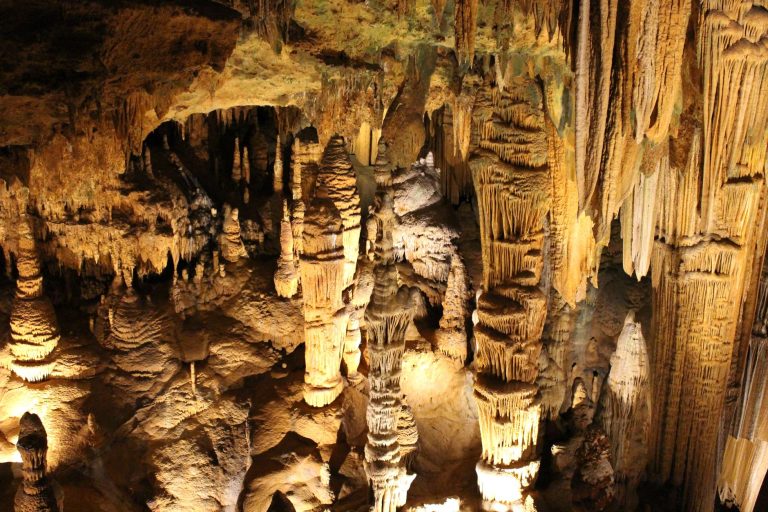
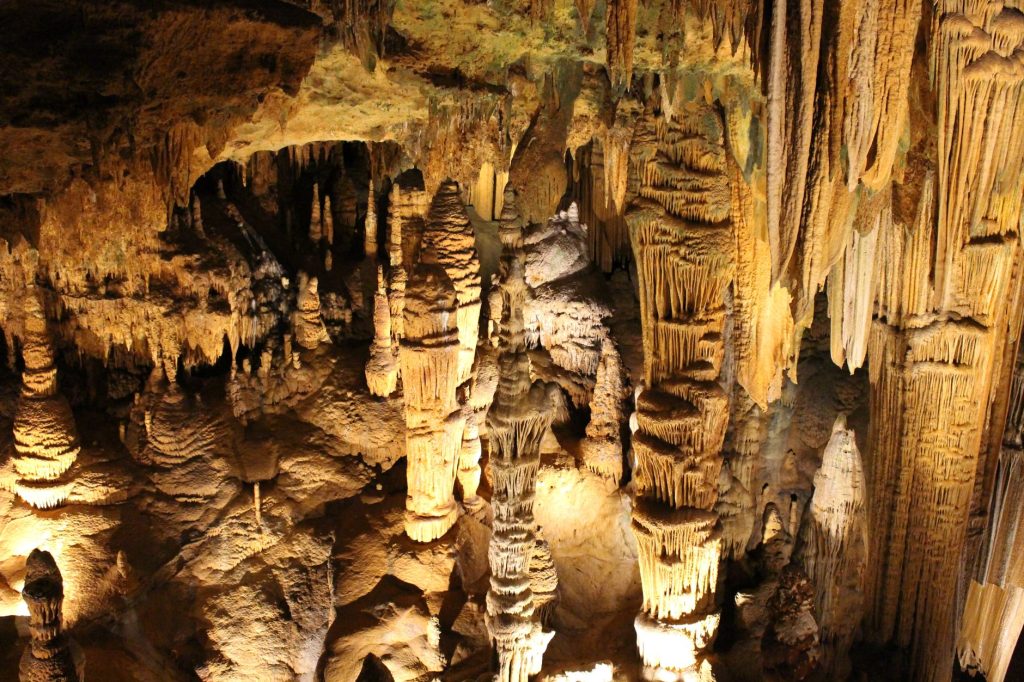
The cave itself is the draw, of course. Visitors descend about 156 feet in an elevator — the original was installed in the 1920s — and walk roughly a mile through passages that maintain a steady 52 degrees year-round, which is both a relief in August and a reason to bring a light jacket in any season. The formations are genuinely impressive: stalactites with real dimension to them, columns that took longer to form than agriculture has existed, the kind of scale that recalibrates a person’s sense of time without requiring any effort on the visitor’s part.
The underground boat ride on the Lake of Venus is the highlight for most people, a short float through a cavern passage on flat-bottomed boats, the ceiling low and the water dark and still. Children tend to go very quiet in that section. Adults usually do too.
Standard tours run about 80 minutes and cost around $24 for adults, less for kids. Howe also offers a Signature Tour that covers more ground and goes into less-developed sections of the cave — worth the extra money for anyone genuinely curious about the geology rather than just the spectacle. Adventure tours, which get into actual crawling through tight passages, are available as well, priced separately and requiring advance reservation.
The site above ground has expanded over the years to include a zip line, gem mining sluice, and a hotel, all of which feel like reasonable additions without crowding out the main event. The gift shop is what it is. The geology museum near the entrance, modest as it is, has real specimens worth looking at before going down.
The caverns are busiest on summer weekends, and waits for tours can stretch to an hour or more during peak weeks in July and August. Weekday visits in June or September move much faster. The cave stays the same regardless of weather above ground, which makes a gray Tuesday in October just as good a day as any.
For anyone coming from Albany, it’s a half-day trip at minimum, comfortably a full day if the kids want to try the gem sluice or if the drive back through Schoharie County — past orchards and old farmhouses — earns a stop or two. The cave is the reason to go. Everything else is extra.