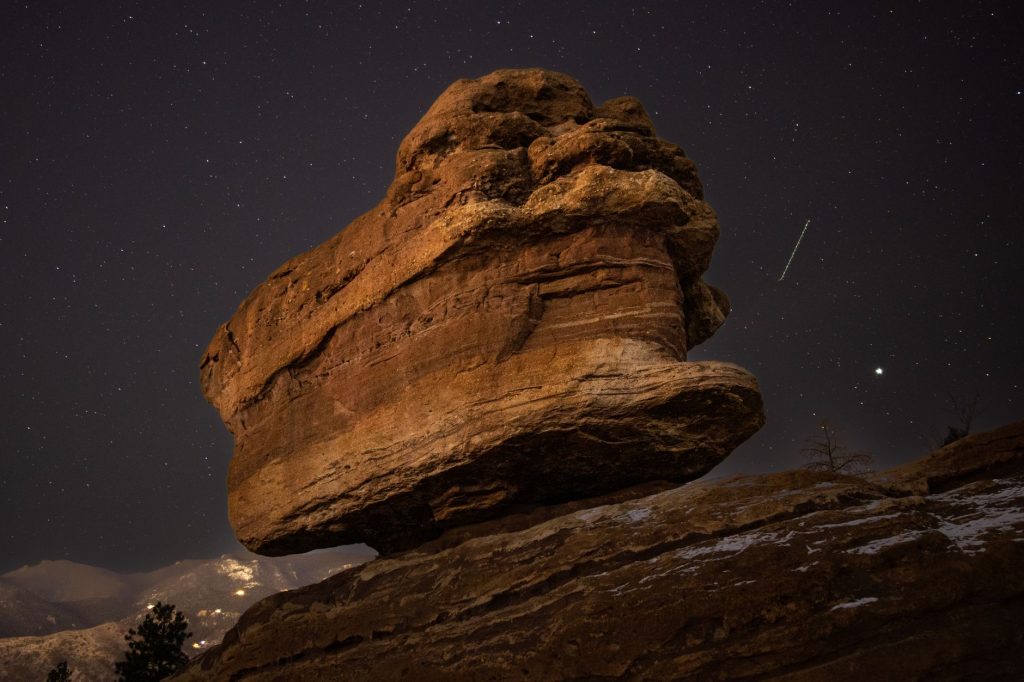
That’s the question most visitors ask around 7 p.m., after they’ve eaten, hiked out their legs, and suddenly noticed the town doesn’t have a lot of flashing lights competing for attention. The answer, at least on the right nights, is to get back in your car and drive to the east end of town near the Hwy 24 corridor, where Woodland Park’s drive-in setup offers something you don’t expect from a mountain town of eleven thousand people: an actual outdoor cinema experience that works precisely because the altitude kills the light pollution.
The Pikes Peak Drive-In on the eastern edge of Woodland Park has been operating seasonally — roughly May through September, weather cooperating — since it was revived from a long dormancy. It’s not glamorous. The gravel lot holds maybe sixty cars comfortably, the FM transmitter occasionally drifts if you’re parked at an odd angle, and the concession stand sells the kind of nachos that arrive in a tray with a suspicious amount of confidence. None of that is a complaint. This is precisely the kind of place that works because it doesn’t try too hard.
Double features run on weekend nights, usually starting around dusk — which at this elevation in summer means somewhere around 8:30 or 9 p.m. Programming skews toward current releases rather than art-house fare, which means you’ll see whatever’s doing well nationally, not a carefully curated retrospective. First-time visitors expecting something cinephile-approved will need to adjust expectations. What you get instead is a decent-sized screen against a backdrop of dark sky, Pikes Peak somewhere behind you in the dark, and the specific pleasure of watching a film while wrapped in a sleeping bag because, yes, even in July, 9,000 feet has opinions about evening temperatures.
Admission runs around $10–$12 per adult, with kids under twelve getting in for less — exact prices shift by season, so check ahead. Cash is accepted; card too, most nights. You can tune in from your front seat or, if the weather’s cooperative and you have a truck bed or folding chairs, from outside entirely. The lot fills early on weekends in peak summer — by 7:30 on a Saturday in August you’re circling for position, so arrive by 7 if you want a good sightline center-screen.
Bring layers. This cannot be overstated. The thin air that makes the stars so sharp also makes 55 degrees feel like a personal affront if you came unprepared. Blankets, a thermos, and the low expectations of someone who just wants to watch a movie outside — that’s the correct gear list. The concession hot chocolate is fine; the popcorn is better than it has any right to be.
What makes this worth your time isn’t cinematic innovation. It’s the specific, low-key pleasure of an experience that’s genuinely rare in Colorado mountain towns — a drive-in that survived, runs reliably, and pairs accidental stargazing between films with something warm in your cup. By the time the second feature credits roll around midnight, you’re not thinking about the nachos or the FM signal drift. You’re thinking that you can see a remarkable number of stars from a gravel parking lot in the Rockies, and that this is a perfectly reasonable way to spend a Tuesday.