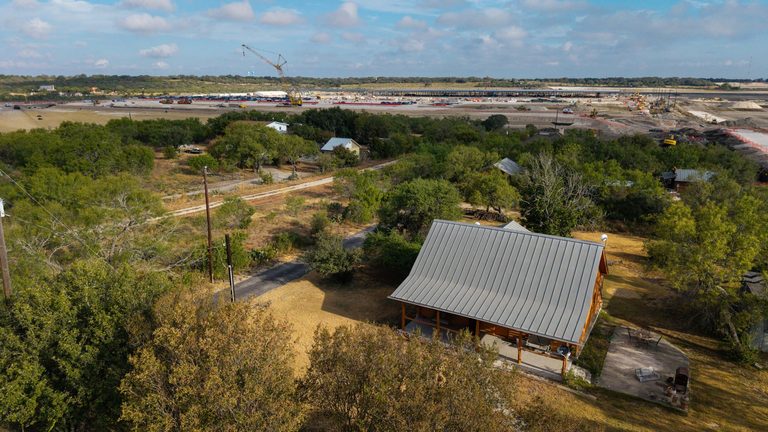
In October, San Antonio city leaders finalized a special‑use permitting framework aimed at tightening oversight of new data‑center construction and expansions. The policy applies to all planned projects but leaves the 23 existing facilities untouched. The San Antonio Water System is also reviewing impact‑fee rules that could begin in 2028.
Local permitting trends
According to city permitting data, seven data‑center permits were issued this year, six fewer than in 2024. Thirteen active requests remain in the pipeline. Meanwhile, CPS Energy reports it currently powers 21 data centers and has 59 projects awaiting connection, with 46 more on the horizon.
Rural expansion accelerates
Outside Bexar County, data‑center construction is booming in adjacent rural counties where land is abundant and zoning authority is limited. The Association of General Contractors of America notes that data‑center construction spending reached $59.3 billion in May 2026, up 23 percent from a year earlier, with Texas ranking second nationally behind Virginia.
Industry analyst Curt Holcomb of Jones Lang LaSalle said San Antonio was once on track to become a major hub due to its cybersecurity and defense operations, but growth is now moving southward where natural‑gas resources are plentiful. He highlighted ongoing projects that are waiting on water and power solutions, coining the phrase “Think San Antonio South.”
State and local opposition
Public Citizen’s Texas Director Adrian Shelley warned that many counties lack zoning authority, allowing developers to site massive facilities with little local oversight. He expressed particular concern about “enormous gas plants” that often accompany hyperscale data centers.
Rural residents have voiced strong objections. A Politico poll conducted in mid‑July found 51 percent of adults in rural areas opposed a data center within three miles of their homes, compared with 32 percent of urban respondents.
County reactions
Medina County now hosts seven data centers in various stages of development, and a pending 800‑megawatt project near Devine is awaiting commission approval. County Judge Keith Lutz acknowledged that Texas counties have limited authority to halt data‑center projects, but he advocated for “guardrails” and permit requirements rather than full zoning power.
In neighboring Guadalupe County, three data centers operate, while Wilson County is constructing a power plant alongside a new facility that is expected to create about 1,000 construction jobs.
Political backdrop
Governor Greg Abbott recently called for a temporary pause on new rural data‑center development and ordered energy audits for facilities seeking grid connections. The Texas Commission on Environmental Quality has since resumed its standard permit review process.
Democratic candidates have also weighed in. Former U.S. Rep. Gina Hinojosa, now governor, campaigned for stricter data‑center restrictions and the repeal of certain industry tax incentives. Texas Agriculture Commissioner Clayton Tucker, a Democrat, proposed agricultural impact studies and the creation of “ag development districts” to protect prime farmland.
Local voices
During an October city council meeting, data‑center workers urged the city to ease regulations, with one employee noting he drives 30 miles to work in Castroville. County Commissioner Larry Sittre, a self‑described “land‑rights person,” argued that data centers are preferable to new housing subdivisions that strain school and county resources. He criticized the state for stripping local governments of authority, saying it left communities “virtually helpless.”
Despite the controversy, the San Antonio administration remains confident that the new permitting process will provide necessary oversight while still encouraging responsible economic development.
Original reporting: San Antonio Report — read the source article.