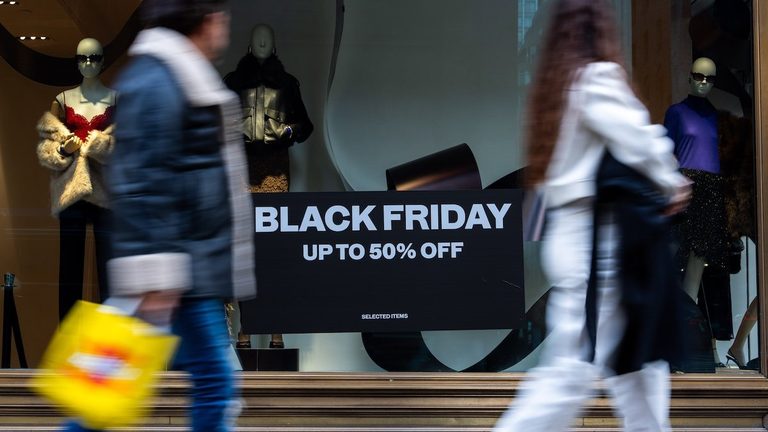
U.S. consumers shattered online sales records on Black Friday, spending $13.1 billion on the single busiest shopping day of the year. The figure, reported by Adobe Analytics, exceeds the company’s forecast and represents an 11% increase over the same day in 2025.
Overall retail growth
When gasoline and automobile purchases are excluded, total retail sales – both in stores and online – rose 5.8% compared with last year’s Black Friday, according to Mastercard SpendingPulse, which tracks all payment forms, including cash.
Sales growth was not driven solely by higher prices. Salesforce reported that the volume of Black Friday orders grew 5% year over year, indicating that more shoppers are placing purchases online.
Global e‑commerce surge
U.S. shoppers were part of a worldwide surge in online spending. Salesforce said global online sales reached a record $82.7 billion on Friday, also up 5% from the previous year, with U.S. sales accounting for $19.1 billion of that total.
Adobe and Salesforce use different data sets, which explains the disparity in their reported figures. Adobe’s estimate is based on more than 1 trillion visits to U.S. retail sites, while Salesforce aggregates shopping data from over 1.5 billion consumers worldwide.
In‑store traffic declines
Physical stores still captured the majority of Black Friday sales, but they saw fewer visitors. RetailNext, which measures real‑time store foot traffic, reported a 2.9% drop in customer counts compared with Black Friday 2025.
Another traffic monitor, Sensormatic Solutions, found foot traffic down 4.2% from the previous year’s Black Friday, though it was up 250% compared with the Friday a week earlier, suggesting a strong weekend rebound.
Joe Shasteen, RetailNext’s global manager of advanced analytics, said households feeling the squeeze on essentials such as gas, groceries and rent are changing how they plan each shopping trip, contributing to the shift toward e‑shopping.
Spending patterns
Mastercard SpendingPulse noted that in‑store spending rose 3.8%, the strongest increase since 2022, indicating that shoppers who did visit stores still spent more per visit.
Michelle Meyer, chief economist at the Mastercard Economics Institute, expects roughly half of this year’s holiday‑season sales growth to be driven by inflationary pressures.
Electronics remained the hottest category overall, with spending on electronics and software up nearly 8% from 2025, according to Mastercard. Gaming consoles, video games, smartphones, headphones and smart glasses were among the top‑selling items.
Beyond technology, online shoppers also stocked up on essentials such as clothing, baby products, pet supplies and household cleaning items, leveraging Black Friday discounts to stretch their budgets.
Looking ahead
While the shift toward digital shopping continues, brick‑and‑mortar retailers remain a vital part of the holiday economy. The mixed picture of rising online sales, modest in‑store spending growth, and declining foot traffic underscores the evolving habits of American consumers as they balance price pressures with convenience.
Original reporting: NBC10 Boston — read the source article.