Most people who stumble onto the Chinese Friendship Garden do so by accident — they’re walking the river path, they round a bend, and suddenly there’s a full moon gate framing a view of the Missouri. The gate is genuine Suzhou stonework, shipped from Bismarck’s sister city in China and assembled here in 2008. That detail alone tends to stop people cold.
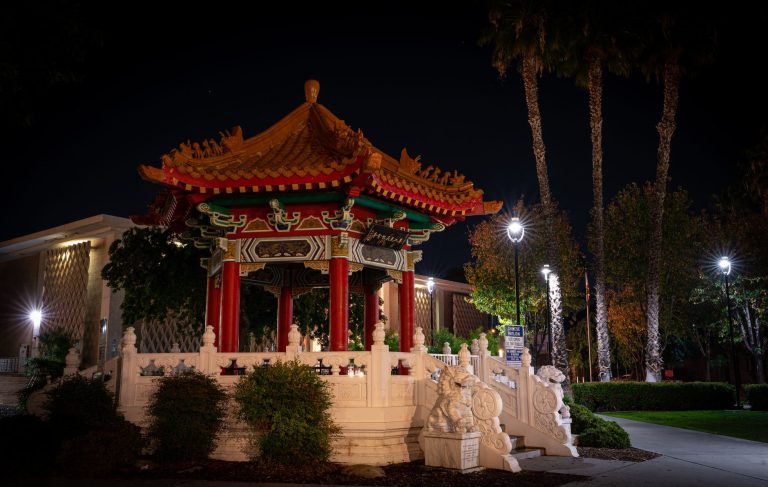
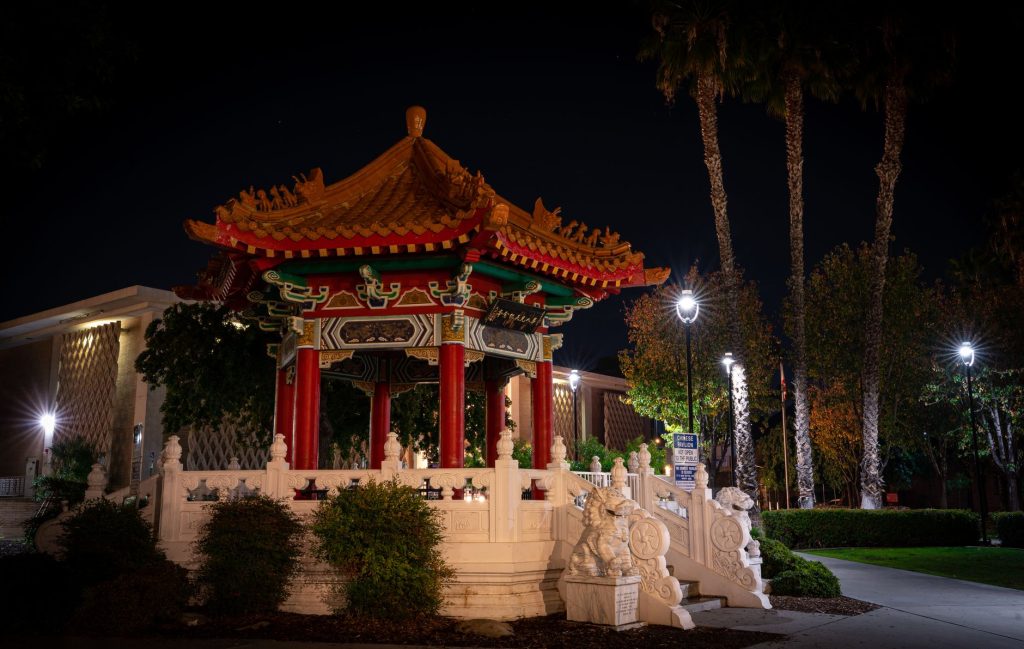
You probably picture a small decorative corner with a few manicured shrubs and a plaque nobody reads. The garden is not that. It occupies a real footprint along the river, anchored by a traditional pavilion with upturned eaves, a koi pond, a zigzag bridge, and that limestone gate — all built to the specifications of craftsmen from Suzhou, one of China’s most celebrated garden cities. The city of Bismarck didn’t just drop some Asian-inspired landscaping next to a parking lot. The Suzhou delegation sent actual artisans to oversee installation. You can feel the difference.
Getting there is easy and free. The garden sits within Sertoma Riverside Park, accessed off River Road on the south edge of downtown, and parking is straightforward. Plan to walk a bit from the lot — the garden is set closer to the water, past the picnic shelters. If you haven’t been to Sertoma before, give yourself time to wander the whole riverbank stretch while you’re out there. The cottonwood corridor along the Missouri in late May or early June smells like something you can’t quite name but won’t forget.
The garden itself takes maybe twenty minutes to walk through properly, longer if you sit in the pavilion for a while, which you should. The koi pond is stocked and reasonably photogenic, though the light is best in the morning before it goes flat. There’s a quietness to the space that’s slightly surprising given how close you are to River Road traffic — the plantings and the stone walls do real acoustic work.
What catches first-time visitors off guard most isn’t the architecture, though. It’s the scale of ambition behind the thing. Bismarck, population around seventy-five thousand, maintains an ongoing cultural exchange with a city of twelve million people, and this garden is the physical record of that relationship. The plaques are worth reading — they trace the history of the sister-city agreement and name the craftsmen involved. It doesn’t feel like boilerplate municipal signage. It reads like actual history.
Go on a weekday morning if you can. Weekend afternoons bring families with young kids, and while there’s nothing wrong with that, the meditative quality of the space works better when it’s quieter. You’re not going to find a café or a gift shop here. Bring water if it’s summer, wear comfortable shoes, and don’t rush. The pavilion has benches, the pond has shade trees, and the Missouri is right there if you want to walk another quarter mile down the path after you’re done.
Admission is free. Parking is free. The only thing the garden costs you is the assumption that nothing architecturally deliberate could be waiting for you on a river walk in central North Dakota.