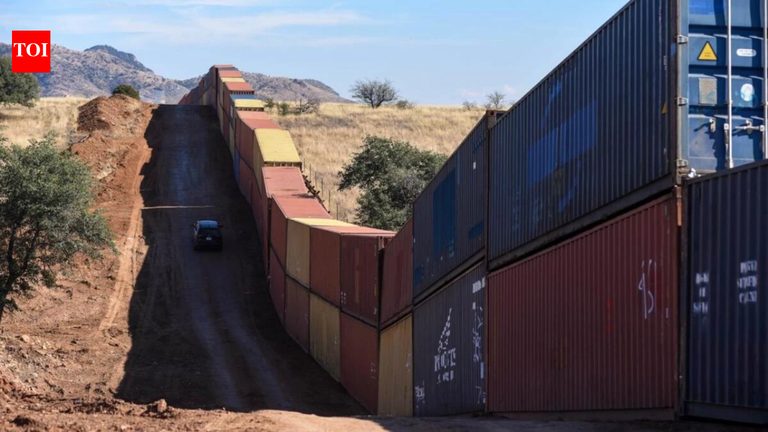
Boxes of Hope, a Tucson‑based nonprofit, announced plans to repurpose 350 to 450 steel shipping containers—originally stacked along Arizona’s 2022 border barrier—into affordable rental homes for local residents. The initiative, reported by Times of India, partners with affordable‑housing developer La Frontera and container‑conversion specialist Ryan Egan to create a new village in southeast Tucson.
The containers, left behind after Arizona dismantled the controversial barrier in early 2023, were part of a double‑stacked wall installed under former Governor Doug Ducey. With about 2,200 containers remaining, Boxes of Hope founder Beau Phillips saw an opportunity for “poetic justice,” saying the structures that once kept people out will now welcome them.
Each converted unit will offer roughly 300 square feet, including a private bedroom, living area, kitchenette, full bathroom and storage. Upgrades will feature new flooring, walls, windows, dense insulation and mini‑split air‑conditioning to handle Arizona’s heat, as well as sliding glass doors. The estimated conversion cost is about $59,000 per home, roughly half the cost the city of Tucson pays private builders for comparable affordable housing, according to the source.
The proposed village will sit on a 25‑ to 30‑acre site within two miles of the containers’ current storage location. Organisers are still identifying land with utility access, public transit and nearby grocery options; the exact address has not been disclosed. The development aims to serve a broad cross‑section of the community—singles, couples, seniors, veterans, single parents, teachers and workers who struggle with the city’s median asking rent of $1,133, as reported.
Beyond housing, the plan includes a community kitchen and dining hall, laundry facilities, a park, transitional housing for people experiencing homelessness, behavioral health services and job‑training programs in trades such as carpentry and plumbing. La Frontera CEO Dan Ranieri emphasized that stable housing alone may not be enough for residents to rebuild their lives, highlighting the importance of combined services.
Funding remains the primary hurdle. Boxes of Hope has secured support from Tucson city leadership, the Arizona Department of Housing and U.S. Senator Mark Kelly’s office, but continues to seek private donations, grants and other contributions to move from planning to construction.
According to the Times of India report, the nonprofit expects to reveal the village’s name, location and detailed development plan in January 2027, after finalizing land arrangements. Site development is slated for spring 2027, with the first residents potentially moving in during the second half of that year, contingent on fundraising and permitting progress.
What’s next: Boxes of Hope aims to finalize a land lease or purchase by early 2027, secure additional housing grants, and begin construction in spring. Residents could start occupying the converted homes in the latter half of 2027, providing much‑needed affordable housing options for Tucson’s growing rental‑market pressures.
Sources: timesofindia.indiatimes.com