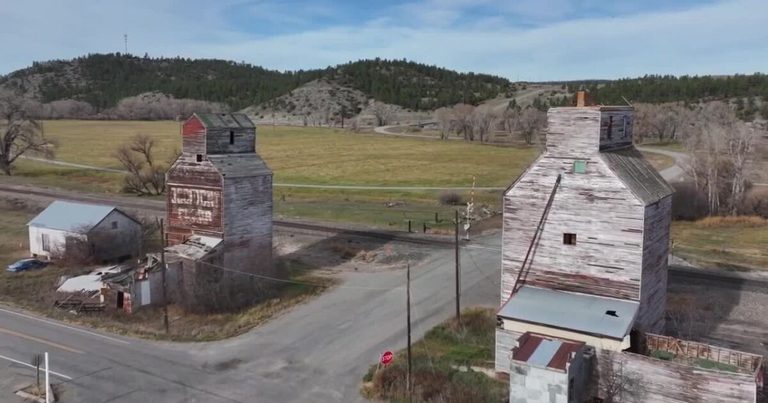
Reed Point, Mont. – For generations, towering wooden grain elevators have been the backbone of Montana’s farm communities, linking harvests to distant markets. Today, Bruce and Barbara Selyem of the Country Grain Elevator Historical Society are racing to document these iconic structures before they disappear.
Preserving a disappearing skyline
The Selyems travel the prairie, photographing and recording elevators that line railroad tracks and dot small towns. “They were built to move grain, not make history,” Bruce says, noting that many of the elevators are now in “tough shape” and “going down.” Yet the couple believes the stories they hold deserve to be remembered.
Some elevators, like the solitary wooden tower that stands alone on the open prairie near Reed Point, still evoke the era when horses and carriages hauled grain to the tracks. Built of wood, many date back a century or more, serving as gathering places during harvest and as vital links between farmers and the broader economy.
From wooden giants to modern steel facilities
While many historic elevators are abandoned, modern steel facilities continue the same fundamental purpose. At Molson Coors in Huntley, regional manager Cody Shick points to four steel elevators that rise roughly 100 feet, storing millions of pounds of barley for the brewery’s famous beer. “It’s an awful lot of beer,” Shick laughs, noting that despite newer technology, the core role of moving grain remains unchanged.
Shick’s facility, which acquired large flat‑storage buildings in the 1970s, illustrates how the grain‑handling industry has evolved while still honoring its roots. A vintage Polaroid from the early 1980s shows the operation’s humble beginnings, underscoring the continuity between past and present.
Why the Selyems care
For Bruce and Barbara, preserving these structures is about more than nostalgia. “They’re trying to tell a story that we may never know,” Bruce explains, emphasizing that each elevator carries the memory of farmers, railroad workers, and families who built Montana’s agricultural identity.
The couple’s documentation includes photographs, oral histories, and detailed notes on each site’s condition. Their work feeds into a broader effort to recognize and protect the state’s rural heritage, ensuring that future generations understand the pivotal role these elevators played.
Community response
Local residents and historians have praised the Selyems’ initiative, noting that the elevators serve as tangible reminders of a way of life that shaped Montana’s culture. While some structures may eventually be lost to time, the couple’s records provide a lasting archive of an industry that remains central to the state’s economy.
As Montana’s agricultural landscape continues to modernize, the Selyems hope their documentation will inspire both preservation and appreciation of the state’s historic grain elevators.
Original reporting: KTVQ Q2 Billings (local) — read the source article.