Every autumn, marine biologist Deborah Giles heads out from her base near the San Juan Islands to track the Southern Resident killer whales, an endangered group of only 76 individuals that have struggled to recover despite decades of protection.
Why the whales need help
Historically, the orcas’ primary prey was the massive Chinook salmon, which once weighed over 100 pounds each. Settlers built dams, over‑fished the rivers and increased boat traffic, shrinking salmon runs and silencing the waters with noise. Today, Chinook average about 12.5 pounds, and the whales are forced to travel farther north to find coho and chum salmon.
“They were here before us, long before us,” Giles said, noting the whales’ deep bond to the region. The loss of food has driven the whales into the open ocean, making it harder for scientists to gather vital health data.
High‑tech and canine teamwork
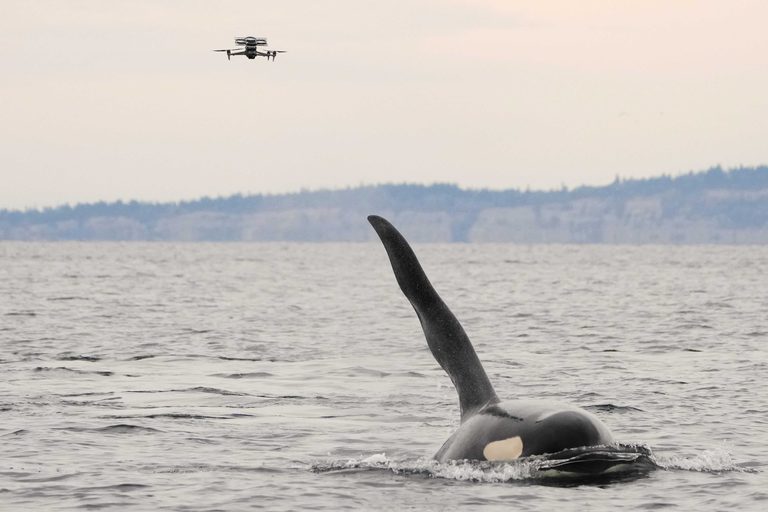
To overcome the challenges, the team combines a small 22‑foot research boat, a drone, and an 11‑year‑old detection dog named Eba. Drone pilot and senior scientist James Sheppard launches the drone from the bow, first hovering high to locate a pod, then descending to a few feet above the water to capture the spray from a whale’s spout.
The drone is equipped with cameras and infrared sensors that record video and body temperature. As the whale exhales, the drone sweeps across the droplets, collecting them on petri dishes and microscope slides mounted on its underside.
“Once we’ve got the sample, it’s important we bring the drone back to the boat quickly so the samples don’t degrade in the wind and sunlight,” Sheppard explained.
After the aerial collection, Eba sniffs the air for fresh fecal matter. Hand‑led by Jim Rappold, Giles’ husband and research partner, the dog alerts the crew when it detects a scent, though on the day of this report the team did not locate any stool.
What the samples reveal
Over the years the researchers have amassed hundreds of breath and fecal samples. Laboratory analysis provides hormonal, bacterial, fungal, parasitic and DNA information, allowing scientists to build health profiles for individual whales.
These profiles help identify reproductive issues; for example, hormone testing has shown many females experience miscarriages, and calf mortality remains high, with observers often seeing mothers carrying dead calves.
In contrast, the neighboring “Bigg’s” killer whales, which feed on abundant sea mammals, are thriving, with females producing calves roughly every two years.
Looking ahead
Giles stresses that while steps such as reducing vessel noise are valuable, restoring robust salmon runs is the most critical action for the Southern Residents.
“It’s our job to turn back the clock,” she said, urging continued conservation efforts to bring back the salmon that sustain these iconic marine mammals.
Original reporting: 40/29 / KHBS (NW Arkansas) — read the source article.