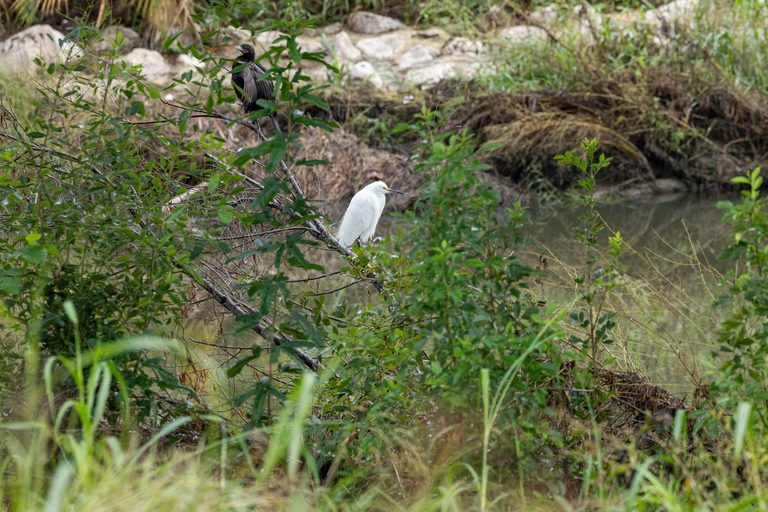
When longtime birder Martin Reid and his spouse were walking the Mission Reach of the San Antonio River, they heard a flash of blue among the ragweed and realized they had witnessed a rare blue bunting. The bird, usually confined to the Rio Grande Valley, had never been recorded in Bexar County before this sighting.
Community excitement and expert insight
Reid quickly captured the bird on camera and alerted fellow bird‑watchers. Within weeks, dozens of enthusiasts gathered on a river bridge hoping to glimpse the striking dark‑blue bird. Lee Marlowe, an amateur birder and the San Antonio River Authority’s sustainable‑landscape ecologist, praised Reid’s expertise, noting that even seasoned birders might have mistaken the blue bunting for the more common indigo bunting.
“If you had only seen it, you could have assumed it was an indigo bunting,” Marlowe said. “The blue bunting was truly unexpected.”
River restoration creates new habitat
The excitement over the rare sighting underscores the broader impact of the River Authority’s restoration work. The Westside Creeks project, begun in 2008, aims to reverse the channelization of five creek segments—Martinez, Alazan Upper, Alazan Lower, Apache and San Pedro—by adding flood‑control, beautification and, crucially, wildlife habitat.
A 2013 Army Corps of Engineers report noted that restoring these creeks would provide “much‑needed riverine habitat benefits for migratory birds utilizing the Central Flyway during their spring and fall migrations.” Marlowe explained that many birds travel thousands of miles, crossing U.S. borders with Canada and Mexico, and often stop in San Antonio.
“We’ve lost so much habitat that any opportunity we have to restore habitat is a good thing and a beneficial thing,” she said. “The more habitat we can have out there, even in urban areas, the better it is for all of biodiversity.”
Avian studies document thriving bird populations
Since 2015, the River Authority has conducted a three‑year baseline avian study along Mission Reach. The study recorded 226 bird species and more than 62,000 individual birds using the corridor. Species observed range from resident favorites like the northern cardinal and American pipit to seasonal visitors such as the yellow‑warbler and ruby‑crowned kinglet.
In a separate two‑year study of the Westside Creeks, Reid helped document 84 species and over 10,000 individual birds. Highlights included 4,090 great‑tailed grackles, 1,335 house sparrows, and rarer finds like the yellow‑crowned night heron and black‑bellied whistling duck.
Both studies provide a valuable baseline for future assessments, helping officials determine whether habitat improvements are increasing species diversity.
Local birding culture thrives
Reid, who transitioned from a career in computers to a lifelong passion for birding, runs a small bird‑watching business and serves on Texas’s Birds Records Committee, the quasi‑official keeper of the state’s bird list. He emphasizes that birding offers a “replacement for hunting,” allowing people to appreciate wildlife without harming it.
For many San Antonio residents, the river’s revitalization has turned a once‑channelized waterway into a vibrant outdoor classroom. Marlowe and other volunteers regularly patrol the banks with cameras and binoculars, ready to document the next unexpected visitor.
Looking ahead
The River Authority hopes the Westside Creeks project will soon mirror the success of Mission Reach, delivering flood control, aesthetic improvements, and expanded habitat for birds and other wildlife. As more native vegetation, trees and shrubs take root, the urban corridor is poised to become an even more valuable stop for migratory birds traveling the Central Flyway.
For now, the rare blue bunting serves as a vivid reminder that dedicated conservation work can bring surprising and beautiful results to the heart of San Antonio.
Original reporting: San Antonio Report — read the source article.