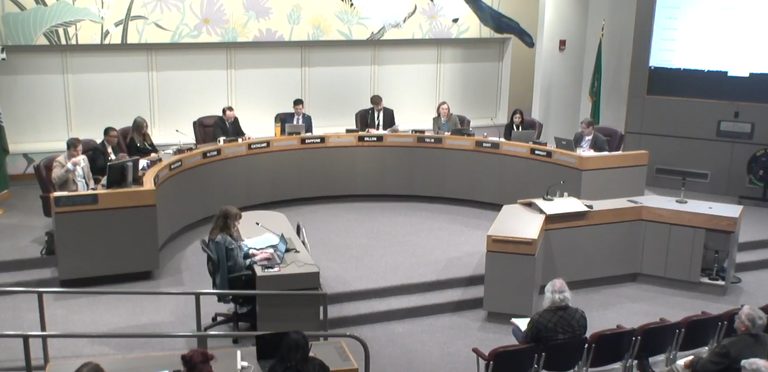
Spokane, Wash. – On Wednesday, the Spokane City Council will take up the city’s Community Wildfire Protection Plan (CWPP) for final approval. The plan, which spans five years from 2027 through 2032, is intended to guide the city’s response to the growing threat of wildfires in the wildland‑urban interface.
Why Spokane needs its own plan
Sarah Nuss, Spokane’s director of emergency management, explained to council members that the city must develop a separate CWPP after Spokane County altered its own process. \”The county decided to update their CWPP at the same time as their hazard mitigation plan, and they rolled that CWPP in as an annex to that hazard mitigation plan instead of having two plans,\” Nuss said. \”With very short notice, they told us we would need to write our own hazard mitigation plan and our own CWPP.\”
Key components of the plan
The CWPP, which runs from pages 1993 to 2072 in the full document, focuses on areas where homes, parks and infrastructure meet fire‑prone vegetation. Its primary actions include:
- Reducing dense vegetation that can serve as fuel for wildfires.
- Creating and maintaining defensible space around residential properties.
- Hardening homes and structures to resist ember ignition.
- Improving evacuation routes, planning and emergency alert systems.
These measures aim to protect families, preserve community assets and give residents clearer guidance on how to prepare for wildfire season.
Council’s next steps
The plan is slated for final consideration during the council’s legislative agenda meeting on Wednesday. Council members will have the opportunity to ask questions, suggest adjustments and vote on whether to adopt the CWPP as the city’s official wildfire strategy.
Local officials stress that community involvement is essential. Residents are encouraged to review the full plan, which is publicly available online, and to participate in any upcoming public‑input sessions the city may schedule.
By adopting the CWPP, Spokane hopes to strengthen its overall emergency‑management posture, safeguard families, and ensure that the city is better equipped to handle the increasing frequency and intensity of wildfires across the Inland Northwest.
Original reporting: KHQ Spokane (news) — read the source article.