Connecticut’s fiscal outlook is tightening as the state moves beyond the billions of dollars in federal COVID‑19 grants that have buoyed its budget for the past several years. The nonpartisan Office of Fiscal Analysis warned lawmakers that program costs for the 2027‑28 fiscal year will rise by over $1 billion—almost six and a half times the projected revenue increase of $158 million.
Revenue assumptions under scrutiny
The revenue forecast excludes several hundred million dollars of extra tax receipts that analysts now expect to flow in. Income‑tax revenue tied to capital gains and business‑tax payments from smaller partnerships—many of which are hedge‑fund‑type entities—are projected to add $419 million in 2027‑28. Those funds are captured by a special savings program the state has run since 2017 to build reserves and reduce pension debt.
Governor Lamont’s cautious approach
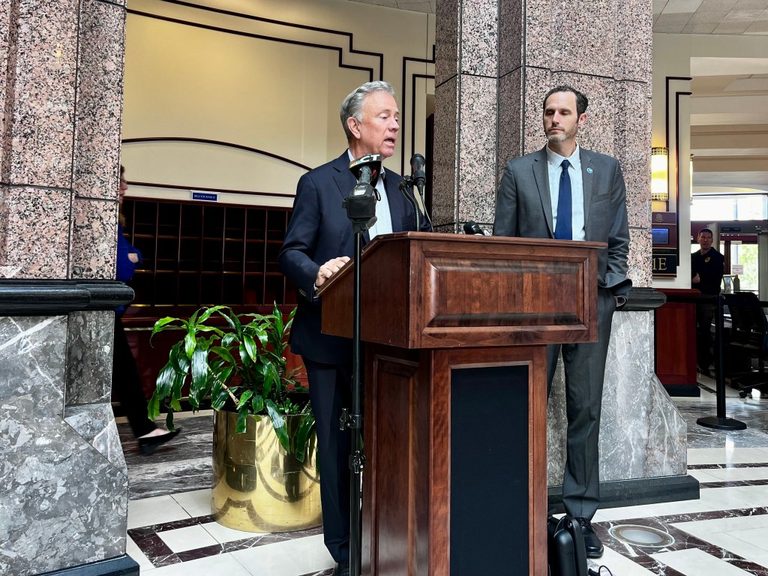
Governor Ned Lamont, while wary of altering the savings rules, acknowledges the need for a balanced response. “I’m pretty careful about that,” Lamont said, emphasizing that the state must avoid spending volatile revenue on long‑term tax cuts that could become unaffordable if market conditions shift.
Since 2017, budget caps have forced Connecticut to run average surpluses of about $1.9 billion—roughly 8‑9% of the General Fund. By contrast, the two decades before that saw an average surplus of just 0.1%, with the largest single‑year surplus of 3.3% in 1998.
Legislative debate over caps and aid
Democratic legislators, who now hold supermajorities in both chambers (116 of 151 House seats and 33 of 36 Senate seats), argue that easing caps could close the projected deficit, fund new investments in education, human services and municipal aid, and enable tax credits for low‑ and moderate‑income households.
Critics note that the caps were easier to tolerate when $4 billion in emergency federal pandemic grants supplemented the budget between 2020 and 2026. With those grants exhausted, the debate intensifies.
Municipal aid and waiver limits
Lamont and his allies campaigned on more than $280 million in new aid to cities and towns, a promise that required a one‑time waiver of the cap limits. Going forward, lawmakers must decide whether to grant additional exceptions or cut other programs to sustain municipal support.
Key spending pressures
The Special Transportation Fund, which services the debt on over $1 billion of annual borrowing for highway, bridge and rail repairs, is projected to run deficits for the next three years. Medicaid, the state’s largest expense, has already faced hundreds of millions in cost overruns, and federal healthcare assistance is slated to decline steadily through 2034.
Human Services leaders are also pushing for a new state nutrition benefit to replace lost SNAP funding for tens of thousands of residents.
Voices from the legislature
Rep. Toni E. Walker, D‑New Haven and co‑chair of the Appropriations Committee, warned that core services cannot be allowed to slip simply because Washington’s aid is disappearing. “The Band‑Aid’s off,” she said, adding that since President Donald Trump’s second term began, the federal government has adopted a “gimme‑back attitude” toward state funding.
Republican leaders caution against abandoning the caps entirely. House Minority Leader Vincent J. Candelora of North Branford said Democrats must demonstrate a viable plan, while Senate Minority Leader Rob Sampson (R‑Wolcott) argued that earlier cost‑cutting proposals were rejected, leaving the state with a $29 billion unfunded pension liability—one of the nation’s highest per‑capita burdens.
State officials remain optimistic
Lamont’s budget director and Office of Policy and Management Secretary Josh Wojcik said projected deficits two and three years out remain modest after accounting for the loss of federal grants. He highlighted that sales and corporation‑tax receipts are $270 million higher than originally planned, reflecting a growing economy.
“We are still seeing growth,” Wojcik said. “We are not seeing significant weaknesses across the board.”
What’s next?
Lawmakers will continue negotiations over budget caps, municipal aid, and tax‑credit proposals in the coming weeks. The outcome will shape Connecticut’s fiscal health as it navigates the post‑pandemic era without the cushion of federal emergency funding.
Original reporting: The Connecticut Mirror — read the source article.