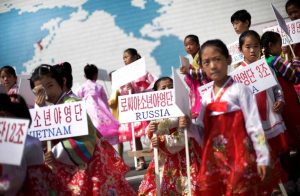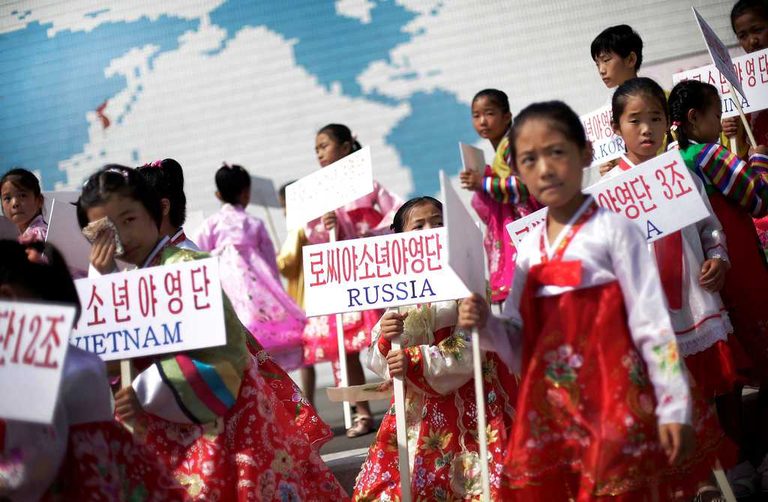
In a swift move that underscores Pyongyang’s increasingly assertive foreign policy, North Korea ordered the closure of the Swiss diplomatic office in its capital and expelled the office head, Sylvain Astier, within 48 hours. The decision follows Swiss sanctions on the Songdowon International Children’s Camp, which the North accused of violating its sovereignty.
Swiss reaction and diplomatic channels
Switzerland’s Federal Department of Foreign Affairs expressed regret over the decision and is arranging for Astier to return to the Swiss embassy in Beijing. The Swiss ministry said diplomatic relations will continue through the Swiss embassy in Beijing and the North Korean embassy in Bern, maintaining dialogue via those channels.
Background on the sanctions
The sanctions target the Songdowon camp in Wonsan, alleged to have facilitated the transfer of children from Russian‑occupied areas of Ukraine for re‑education with pro‑Russian propaganda. The United Kingdom and the European Union imposed similar measures earlier this year, freezing the camp’s assets and banning financial transactions. While largely symbolic given North Korea’s limited financial ties to Europe, the sanctions provoked a strong response from Kim Jong Un’s sister, Kim Yo Jong, who labeled the Swiss action an “open hostile act.”
North Korea’s broader diplomatic warning
Analysts say the abrupt closure sends a broader warning to any nation that expands sanctions or pursues policies Pyongyang deems hostile. Koh Yu‑hwan, former president of South Korea’s Institute of National Unification, noted that the move could pressure remaining Western contacts such as Sweden and Switzerland.
Leif‑Eric Easley, a professor at Seoul’s Ewha University, added that North Korea’s deepening ties with Russia give it confidence to make an example of Switzerland, showing it will engage only from a position of strength.
Potential risks for Pyongyang
Some experts caution that the strategy may further isolate North Korea. Moon Seong Mook of the Korea Research Institute for National Strategy warned that while the move may please Russia, it could deepen the regime’s isolation from the international community.
Park Won Gon, also of Ewha University, highlighted the risk of losing Europe as an alternative partner, noting that about 98% of North Korea’s external trade was with China in 2025. He warned that European countries may view the regime as untrustworthy.
Implications for U.S. and allied policy
While Russia and China have blocked recent U.N. sanctions efforts, the United States and its allies continue to impose targeted sanctions on North Korean illicit activities, including cyber‑fraud and cryptocurrency theft. President Trump’s administration has maintained a firm stance on denuclearization, refusing to engage in talks unless Washington drops its demand for a complete nuclear dismantlement.
Kim Jong Un’s recent diplomatic engagements, including receiving credentials from ten new ambassadors, signal his intent to portray North Korea as a sovereign nuclear power on equal footing with the United States.
What this means for local observers
For communities with ties to Swiss humanitarian projects or families concerned about the welfare of children in conflict zones, the closure reduces a rare Western point of contact in Pyongyang. It also underscores the importance of vigilant monitoring of foreign policy developments that can affect global stability and, indirectly, local security.
Original reporting: Oklahoma City News Feed (HLL/CB) — read the source article.