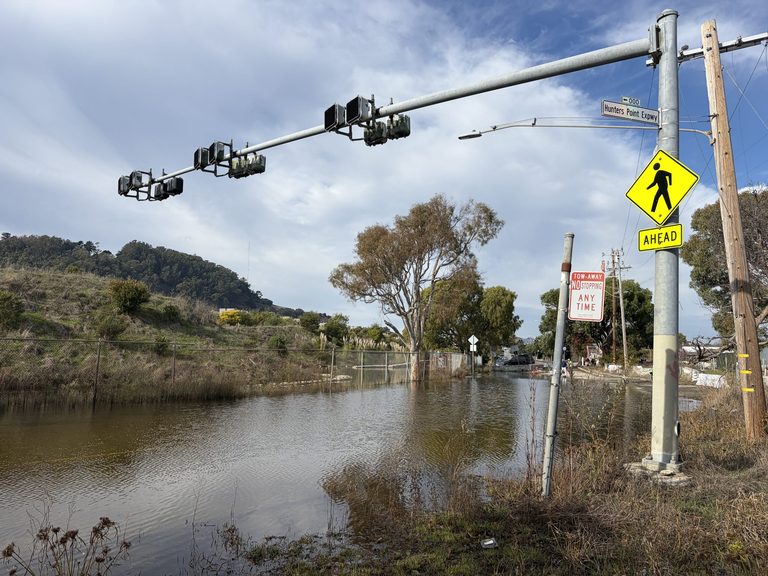
San Francisco residents in the Bayview‑Hunters Point neighborhood are facing continued flooding at Candlestick State Park, where water has pooled to several feet deep on the former stadium roadway and the adjacent Hunters Point Expressway since last Wednesday. The situation is compounded by an El Niño‑driven rain forecast that could keep the area inundated for weeks, raising health concerns for park users and nearby wildlife.
According to Mission Local, three temporary pumps—each under two feet tall—are currently operating under contract with FivePoint, the developer slated to transform much of the surrounding land into mixed‑income housing. FivePoint broke ground on the project in early September and aims to complete its first housing units by 2030, with full build‑out expected through 2048. The developer said it has “volunteered to support the city’s water removal efforts at the site,” even though the park remains city‑owned and managed.
FivePoint plans to install a permanent pumping system to drain stormwater and protect the future development, but until that system is in place, the temporary pumps remain the only barrier against standing water that may contain raw sewage, toxic chemicals, heavy metals and debris. The San Francisco Department of Public Health warned residents to avoid walking or driving through the flooded areas, to stay clear of any contact with the water, and to wash thoroughly with soap and water if exposure occurs.
Flooding at Candlestick is not new; the site, a former landfill turned park, experiences periodic inundation each winter. When the stadium operated from 1960 to 2014, two permanent pumps moved water into the bay, but those were never replaced after the stadium closed. The Hunters Point Expressway, which once linked the park to Highway 101, was shut in 2023 due to sea‑level rise and persistent flooding, forcing park access to shift to a temporary entrance on Gilman Avenue—also partially flooded.
Rachel Norton, director of the California State Parks Foundation, noted that the area has long been “a kind of no‑man’s land,” with limited nearby residents to advocate for cleanup. She recalled a previous winter when a city crew, prompted by the nonprofit, pumped floodwaters into the bay within days. Norton expressed concern over the trash and debris littering the water, saying, “It doesn’t smell very good, and I certainly wouldn’t want my kids wading around in it. God knows what’s in there.”
Bart Grant, a senior state parks and recreation specialist, emphasized the longer‑term challenge of rising sea levels. He said a plan exists to raise the park’s elevation to protect it from future king tides, but until that is realized, heavy waves could “very likely” erode the park’s beaches. Grant added that FivePoint’s development will eventually bring gutters, sewer systems and an outflow that will push floodwaters into the bay, describing that as “the long‑term solution.”
What’s next: FivePoint will continue operating the temporary pumps while working toward a permanent drainage system. The city’s Department of Public Health urges residents to avoid the flooded zones and to stay informed about El Niño‑related weather updates. Further progress on the park’s elevation‑raising plan and the housing development’s timeline will be monitored through 2028.
Sources: missionlocal.org