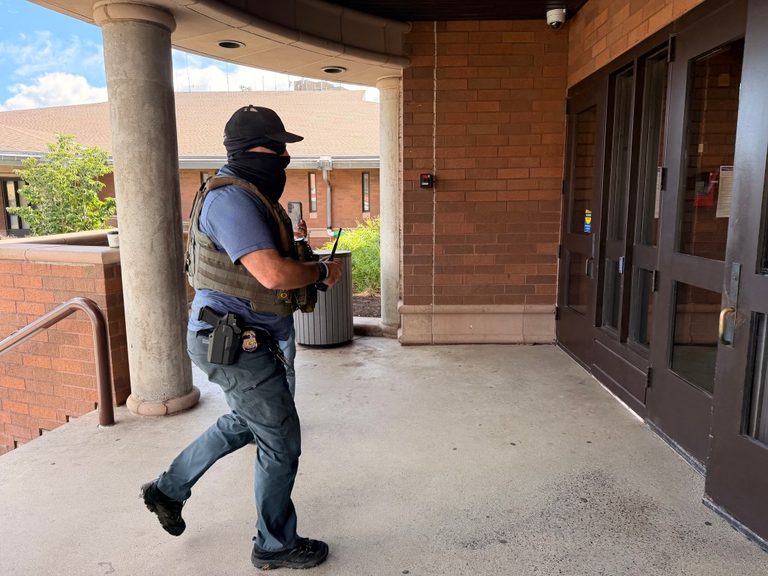
When a federal judge issued an injunction last week against four sections of Connecticut’s Senate Bill 397, state leaders and immigrant‑rights advocates said the decision was expected but not a defeat. The law, passed in 2026, sought to limit how U.S. Immigration and Customs Enforcement (ICE) agents operate in the Constitution State, including a ban on agents wearing masks or other facial coverings while interacting with the public.
State officials remain committed
“It underlines our state’s willingness to pass policies that could be challenged because they are the right thing to do,” said Constanza Segovia, organizing director for Connecticut For All and co‑founder of Hartford Deportation Defense. Segovia added that the legislation sends a clear message to both illegal immigrants and long‑time residents about where Connecticut stands on immigration enforcement.
Judge’s ruling and federal response
U.S. District Judge Vernon Oliver agreed with the Justice Department that the state law “plainly imposes conditions on how federal officers must conduct and present themselves” and violates the Supremacy Clause, which makes federal law supreme when conflicts arise. The Justice Department called the law “blatantly unconstitutional,” arguing that states lack authority to dictate federal agents’ conduct.
Parts of the law remain in effect
Advocates noted that one provision—requiring ICE agents to obtain a warrant before entering schools, hospitals or places of worship—was not blocked and continues to protect vulnerable locations. “That section goes the longest way toward making immigrant folks feel safer,” said Carolina Bortolleto, organizer with Greater Danney Unites for Immigrants.
Looking ahead to 2027
Both supporters and critics say the conversation is far from over. Bortolleto hopes the next legislative session, beginning in January, will expand protected sites to include doctors’ offices. Segovia said her group will focus on closing any regulatory loopholes that could disenfranchise illegal immigrants and people of color, while also pushing for broader health‑care access and renter protections.
State leaders’ response
House Speaker Matt Ritter (D‑Hartford) expressed interest in allocating $10 million for legal aid and emergency cash assistance for families affected by ICE enforcement. “We’re not giving up,” he said, adding that the Democratic majority in Washington should step up to help states protect their residents.
Rep. Steven Stafstrom (D‑Bridgeport), a co‑chair of the Judiciary Committee and key backer of the law, echoed that sentiment: “We’re not backing down.” He noted that while the injunction halted the inspector‑general oversight provision, state attorneys in each judicial district can still pursue investigations into use‑of‑force abuses.
Community concerns
Local activists continue to voice safety worries. Juan Fonseca Tapia, co‑founder of Greater Danbury Unites for Immigrants, described the experience of encountering masked agents as “traumatic,” especially when they are armed. He emphasized that phones can be used to record interactions, but masks complicate accountability.
Despite the setback, many see the ruling as a temporary hurdle. Miguel Castro, second vice chair of the Connecticut Hispanic Democratic Caucus, said the state will explore further legal avenues, invoking the 10th Amendment and the state’s sovereign responsibility to protect its communities.
What’s next?
Connecticut’s next steps will likely involve drafting new proposals for the 2027 session, seeking ways to safeguard residents while respecting federal authority. The debate underscores the ongoing tension between state‑level immigration policy and the federal government’s enforcement agenda under President Trump’s immigration crackdown.
Original reporting: The Connecticut Mirror — read the source article.